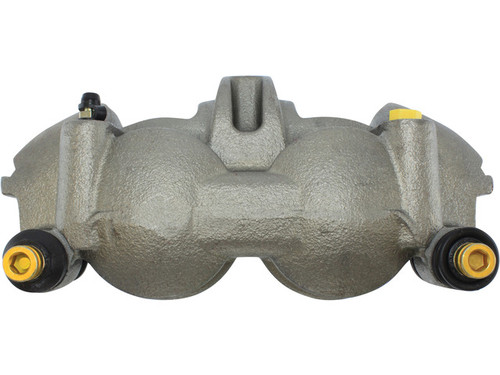
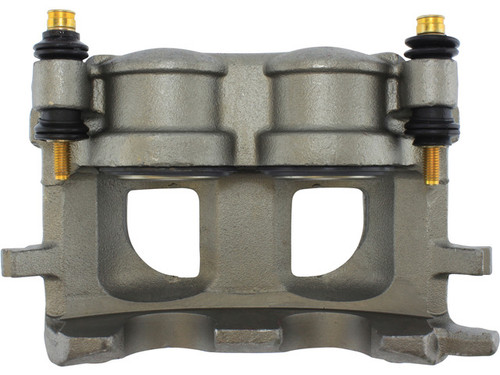
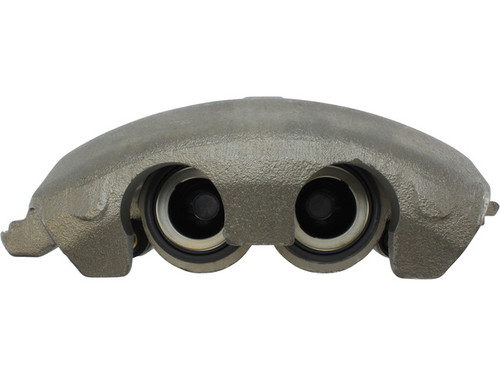
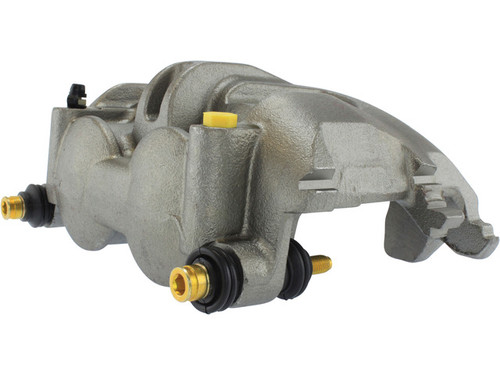
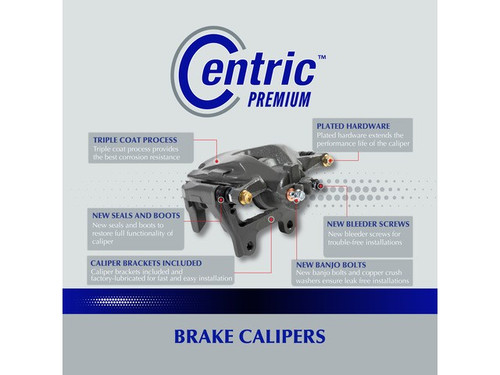
Clamp the brake pads against the rotor with consistent hydraulic force using the Centric Semi-Loaded Disc Brake Caliper 141.80013 (also written 14180013), a remanufactured rear caliper. It's a direct-fit replacement for the 2004-2009 Chevrolet C4500 Kodiak, 2004-2009 Chevrolet C5500 Kodiak, 2004-2009 GMC C4500 Topkick, and 2004-2009 GMC C5500 Topkick — see the Buyer's Guide tab for engine-level fitment.
- New phenolic pistons: this semi-loaded caliper is fitted with new phenolic pistons to actuate the pads under hydraulic pressure.
- Remanufactured & tested: rebuilt to exacting standards, then 100% pressure tested and inspected to verify proper operation and fitment.
- Corrosion protection: tumble blasted and treated with an anti-corrosion finish to help resist rust.
- Hardware and brackets included where applicable to ease installation; comes without brake pads.
Signs a caliper may need replacing include fluid leaks, a piston that sticks or won't retract, uneven pad wear, or a brake that drags or pulls. Sold individually — for even, balanced braking, replacing the caliper on both sides of the axle as a matched pair is recommended.
Frequently Asked Questions
Does this caliper come with brake pads?
No. It comes without brake pads. It is a semi-loaded caliper that includes hardware and brackets where applicable, but you'll need to supply pads separately.
What vehicles does the 141.80013 caliper fit?
It fits the 2004-2009 Chevrolet C4500 Kodiak and C5500 Kodiak, and the 2004-2009 GMC C4500 Topkick and C5500 Topkick. Check the Buyer's Guide tab to confirm your vehicle.
Is this a new or remanufactured caliper?
It is remanufactured to exacting standards and fitted with new phenolic pistons. Each unit is 100% pressure tested and inspected to verify proper operation and fitment.
Do I need to buy two calipers?
This listing is for one caliper, sold individually. Replacing the caliper on both sides of the axle as a matched pair is recommended for even, balanced braking.
How do I know if my caliper is failing?
Common signs include brake fluid leaks, a sticking or seized piston, uneven pad wear, or a brake that drags or pulls. Diagnose the cause before replacing.
Write a Review