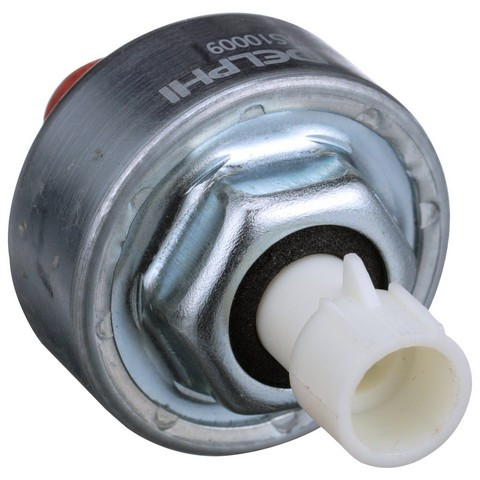

Delphi Ignition Knock (Detonation) Sensor P/N:AS10323
Keep detonation in check on your Hyundai Sonata and its Hyundai/Kia siblings with the Delphi Ignition Knock (Detonation) Sensor AS10149. This self-generating piezoelectric sensor listens for the vibration frequencies of pre-ignition knock and feeds an accurate signal to the engine control module so timing can be adjusted. It drops in as a direct-fit replacement for the listed applications: 2006-2010 Hyundai Sonata, 2006-2011 Hyundai Azera, 2006-2012 Kia Sedona, 2007-2009 Hyundai Santa Fe, 2007-2012 Hyundai Veracruz, 2007-2010 Hyundai Entourage, 2007-2009 Kia Amanti, and the 2014 Kia Sedona — see the Buyer's Guide tab for engine-level fitment.
Delphi sensors are tested and calibrated to OE standards for accurate readings.
Interchange: 39320-3C000
393203C000 · 5S7688 · S8899 · DKS739 · KS299 · SU9176
This part cross-references / interchanges with the following part numbers:
What does this knock sensor do?
It uses a piezoelectric element to detect the vibration frequencies of engine knock (detonation) and sends that signal to the ECM, which can then adjust ignition timing.
Does the Delphi AS10149 fit my Hyundai Sonata?
It is a direct-fit replacement for the 2006-2010 Hyundai Sonata among other listed applications. Check the Buyer's Guide tab to confirm the match for your exact year and engine.
Which vehicles does this sensor fit?
Listed applications include the Hyundai Sonata, Azera, Santa Fe, Veracruz, and Entourage, plus the Kia Sedona (2006-2012 and 2014) and Kia Amanti. See the Buyer's Guide tab for full details.
Does it need a power supply?
No. The self-generating piezoelectric design produces its own signal and requires no power supplied to the sensor.
What are signs this knock sensor may need replacing?
A stored knock-sensor trouble code, an illuminated check engine light, or reduced performance can be signs. Diagnose the cause before replacing, as other issues can trigger similar symptoms.
WARNING: These products can expose you to chemicals including lead and phthalates, which are known to the State of California to cause cancer and birth defects or other reproductive harm. For more information go to www.P65Warnings.ca.gov.