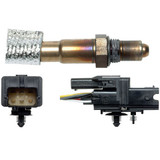
DENSO Auto Parts Air / Fuel Ratio Sensor P/N:234-9016
DENSO Auto Parts 234-9004 air / fuel ratio sensor for the 2002-2005 Honda Civic 4-cylinder 2.0L and other vehicles reads the oxygen level in the exhaust so the engine computer can adjust fuel delivery. It is manufactured and tested to OE standards and built for a first-time fit.
A check engine light, a rough idle or lower fuel economy can mean the sensor is worn, though a worn spark plug or a leaking exhaust manifold can be behind them too, so find the cause before replacing it.
It is a direct-fit upstream air fuel ratio sensor for the 2002-2005 Honda Civic 4-cylinder 2.0L and the 2002-2004 Acura RSX 4-cylinder 2.0L. This listing is one sensor, and either car takes a single one.
Fit and size
Build and materials
This part cross-references / interchanges with the following part numbers:
Does this DENSO Auto Parts air fuel ratio sensor fit the 2002-2005 Honda Civic 4-cylinder 2.0L?
Yes. DENSO 234-9004 is a direct-fit upstream sensor for the 2002-2005 Honda Civic 4-cylinder 2.0L, and that car takes one.
Is this an air fuel ratio sensor for the 2002-2004 Acura RSX 4-cylinder 2.0L?
Yes. This upstream sensor is a direct fit for the 2002-2004 Acura RSX 4-cylinder 2.0L, which takes one.
How long is the wiring and what connector does the DENSO 234-9004 have?
The DENSO 234-9004 has four wires and a male connector. Its wiring harness is 10.24 inches long, and the thread diameter is 0.711 inch.
What protects the sensing element in this wide-band sensor?
A laser-welded stainless housing resists corrosion, a PTFE filter blocks contaminants, and dual-layer protection shields the ceramic element for fast, reliable response times.
How can I tell if this upstream sensor is going bad?
A shop can read the stored codes and test the sensor, which is the reliable way to tell. Warning lights and poor fuel economy can mean it is worn but can have other causes.
No reviews yet — be the first to review this product.
Write a Review
WARNING: These products can expose you to chemicals including lead and phthalates, which are known to the State of California to cause cancer and birth defects or other reproductive harm. For more information go to www.P65Warnings.ca.gov.