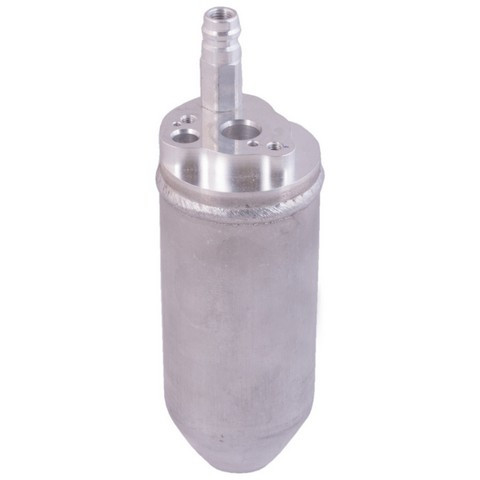
DENSO Auto Parts A/C Receiver Drier P/N:478-2069
Help keep moisture and debris out of your air-conditioning system with the DENSO A/C Receiver Drier, part number 478-2031. It fits many vehicles, among them the 2003-2012 Honda Accord, 2006-2011 Honda Civic and 2009-2013 Honda Fit, and it is a direct-fit replacement for the listed applications. See the Buyer's Guide tab for the full list and engine details.
Receiver-driers are easy to overlook in routine service, yet they play an important role in how the A/C works. Leading service authorities often recommend replacing the receiver-drier whenever major A/C service is performed. This unit belongs to DENSO's First Time Fit® line and is built to DENSO's most stringent factory standards.
This part cross-references / interchanges with the following part numbers:
What does an A/C receiver drier do?
It manages the flow of liquid and vapor refrigerant through the A/C system. Its desiccant package traps moisture, which helps protect internal components from corrosion.
Is this the right Honda Civic A/C receiver drier for a 2006-2011 Honda Civic?
Yes, it is listed for the 2006-2011 Honda Civic, along with the 2003-2012 Honda Accord and 2009-2013 Honda Fit. The Buyer's Guide tab shows every listed application.
When should the receiver drier be replaced?
Leading service authorities often recommend replacing the receiver-drier whenever major A/C service is performed, because its desiccant is there to isolate moisture from the system.
What are signs a receiver drier may need replacing?
Possible signs include weak or inconsistent cooling, oily residue or a leak at the drier, or an A/C system that has been opened to the atmosphere. Have the system diagnosed to confirm the cause.
Is installing a receiver drier a DIY job?
The refrigerant must be recovered before the drier is replaced, and the system evacuated and recharged afterward. It is best handled by a qualified A/C technician with the proper equipment.
WARNING: These products can expose you to chemicals including lead and phthalates, which are known to the State of California to cause cancer and birth defects or other reproductive harm. For more information go to www.P65Warnings.ca.gov.