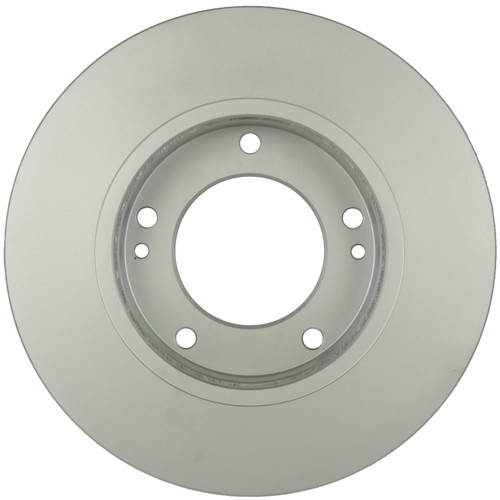


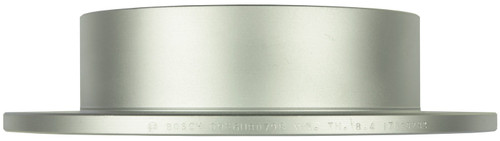

Bosch 28010804 rear brake rotor for the 1999-2005 Hyundai Sonata and other vehicles is the disc that the rear pads clamp to slow the wheel.
A disc brake rotor wears with use. Deep grooves, rust on the face or a pulsing pedal can mean the rotor is worn, but worn pads or a sticking caliper can cause some of the same signs, so find the cause before replacing the rotor. At a brake service, look over the rotor face and measure its thickness against the discard specification engraved on the edge.
Bosch 28010804 is listed for the 1999-2005 Hyundai Sonata, the 2001-2006 Kia Optima and the 2001-2006 Kia Magentis, with one rotor on each side of the rear axle. This listing is one rotor, and the left and right rear rotors are normally replaced together.
Fit and size
Build and materials
Interchange: 5841138310 · 584113C000
This part cross-references / interchanges with the following part numbers:
Are these 1999-2005 Hyundai Sonata rotors for the front or the rear axle?
Rear. Bosch 28010804 is a rear brake rotor for the 1999-2005 Hyundai Sonata, one rotor for each side of the rear axle.
Does this Bosch brake rotor fit the 2001-2006 Kia Optima?
Yes. Bosch 28010804 is listed for the 2001-2006 Kia Optima and also for the 2001-2006 Kia Magentis.
What are the center bore and bolt circle of these Bosch QuietCast rotors?
The center bore diameter is 76 mm and the bolt circle is 114.3 mm with 4 lug holes. Nominal thickness is 10 mm.
What do the ABS sensor rings on this Bosch QuietCast brake rotor do?
The ABS sensor rings allow trouble-free operation of ABS and traction control on vehicles equipped with them.
Is the Bosch QuietCast premium disc brake rotor coated against rust?
Yes. It has a full coating (Geomet) that protects against corrosion.
Published by the manufacturer of this part. Links open in a new tab.
No reviews yet — be the first to review this product.
Write a Review

WARNING: These products can expose you to chemicals including lead and phthalates, which are known to the State of California to cause cancer and birth defects or other reproductive harm. For more information go to www.P65Warnings.ca.gov.
