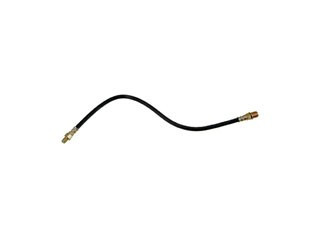
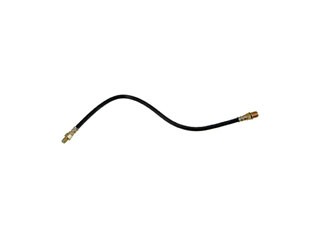
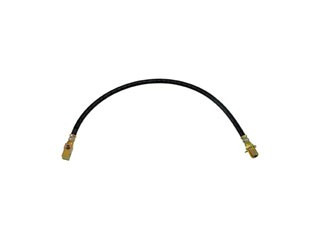
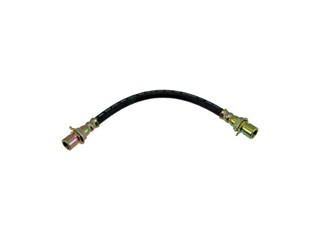
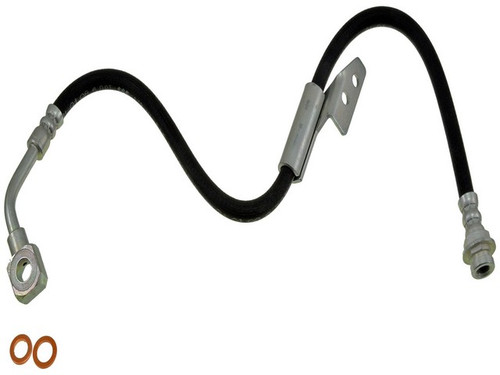
Keep hydraulic brake pressure moving through the flexing gap between chassis and wheels with the Dorman First Stop Brake Hydraulic Hose H24458, a DOT-approved flexible hose made with EPDM rubber and treated steel fittings. It fits many vehicles, among them the 1968 Dodge D300 Pickup, 1961-1967 Dodge D300 Series and 1961 Dodge P300 Van. See the Buyer's Guide tab for the full list.
Dorman precision-engineered this hose to mirror the original brake hose's fit, function and performance on specific vehicles and positions. It is intended for safe, durable service as part of a complete brake repair.
- Ideal replacement: precision-engineered to match the performance of the original brake hose on specific vehicles.
- Position-specific: made to precise measurements for an exact fit and easy installation. Cataloged positions include front left, front right, rear, rear left and rear right, depending on the application.
- Quality assured: materials are tested to exacting government-regulated safety and durability standards, and the hose is DOT approved.
- Durable design: EPDM rubber hose with a rubber outer sleeve and specially coated, corrosion-resistant treated steel fittings.
Specifications: overall length 22 in; male fittings on both ends; black. The package holds one brake hose. A gasket or seal, mounting hardware and a bracket are not included. Consult the vehicle service information for any seals, clips or brackets the installation requires, and for whether the originals may be reused. Country of origin: China.
A cracked or bulging hose, fluid seeping at the fittings, or a soft, spongy pedal can be signs that a brake hose may need replacing. Diagnose the brake system before replacing parts, and bleed the brakes after installation.