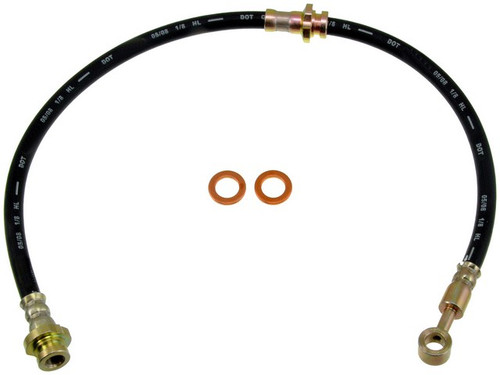
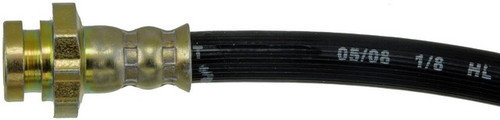
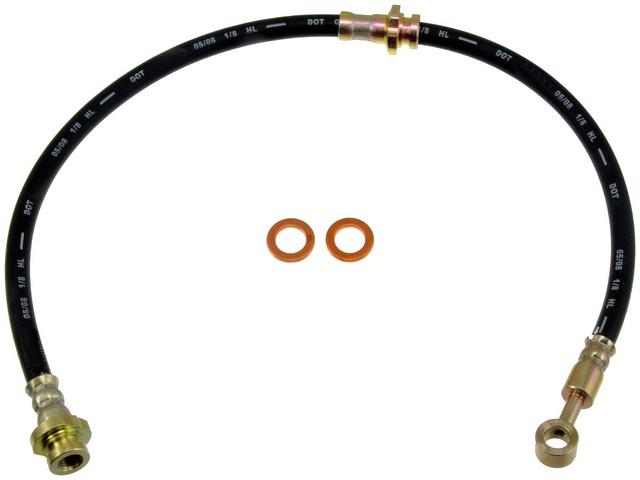
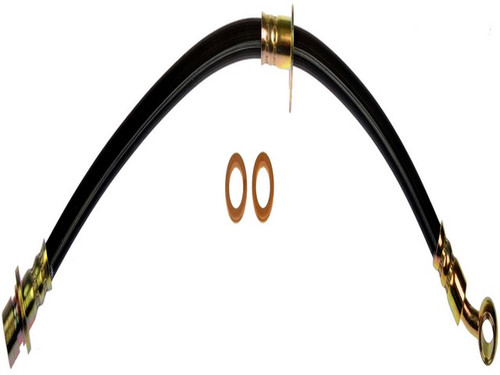
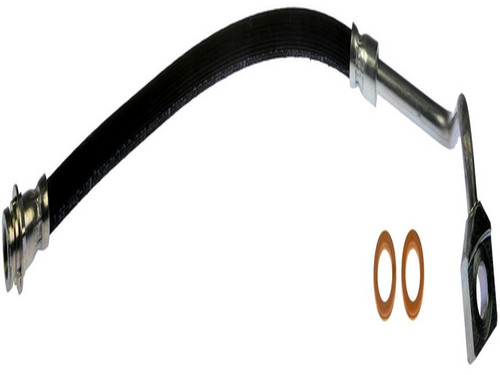
Replace a cracked or leaking rear left brake hose with the Dorman brake hydraulic hose, part number H380487 from Dorman - First Stop. It is a direct-fit replacement for the 1995-2003 Nissan Maxima, 1996-2001 Infiniti I30 and 2002-2004 Infiniti I35, built for the rear left position.
A brake hydraulic hose is the flexible link between the vehicle's rigid brake line and the wheel's brake. It carries pressurized brake fluid while flexing with suspension movement. Dorman precision-engineered this hose to match the original's fit, function and performance on the listed vehicles and position, as part of a complete brake repair.
- Ideal replacement: engineered to perform like the original brake hose on specific vehicles.
- Position-specific: made to precise measurements for an exact fit and easy installation in the rear left position.
- Quality assured: its materials are tested to exacting government-regulated safety and durability standards.
- Durable design: made with EPDM rubber, with specially coated, corrosion-resistant fittings.
Signs a brake hose may need replacing include visible cracks or bulges, fluid seepage at the hose or its fittings, and a soft or spongy brake pedal. A spongy pedal can have other causes, so inspect the system first. If the rear left hose is the cause, this part replaces it. Bleed the brakes after installation, following the vehicle service information.
Interchange: 87-04345 · HB-51345 · 150.42345 · 350-67137
8704345 · HB51345 · 15042345 · 35067137 · 18J1312 · B916792 · B918121 · 611161 · 78418 · 78948 · BH251710 · 4621031U02 · 4621031U22 · 462104Y902 · 462104Y922 · BH380487 · BH381589 · 2203558 · 2204253 · BH138634 · F138634
This part cross-references / interchanges with the following part numbers:
18J1312, 87-04345, B916792, B918121, 611161, HB-51345, 78418, 78948, 150.42345, BH251710, 350-67137, 4621031U02, 4621031U22, 462104Y902, 462104Y922, BH380487, BH381589, 2203558, 2204253, BH138634, F138634