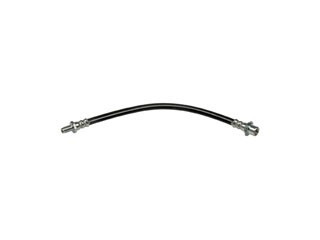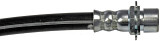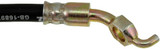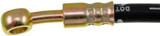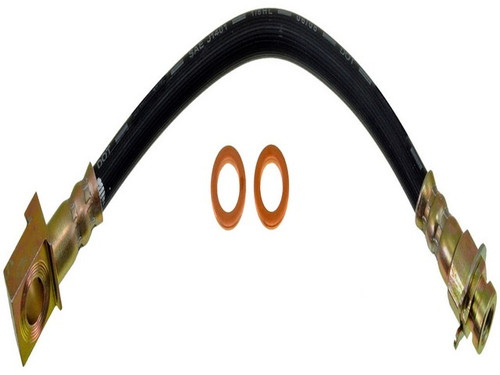
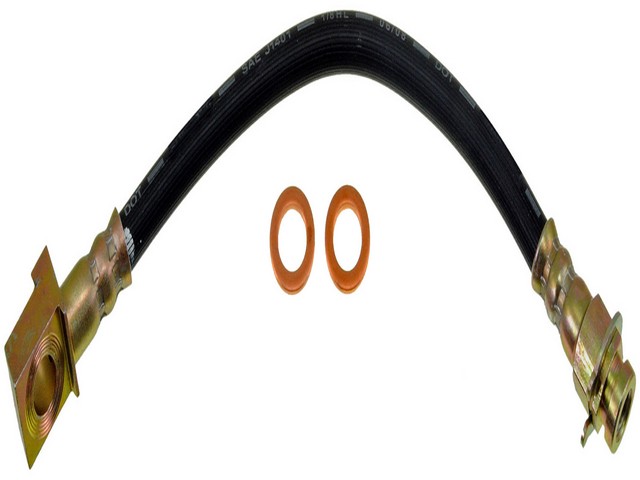
Deliver pressurized brake fluid to the rear right corner with the Dorman - First Stop Brake Hydraulic Hose H38188. It drops in as a direct-fit replacement for the rear right (RR) position on the 1983 Chevrolet Camaro and 1983 Pontiac Firebird, routing fluid from the rigid brake line to the wheel-end brake unit while flexing to accommodate suspension and steering movement.
If a failed or leaking hose is the cause of a spongy pedal or fluid loss at that corner, this replaces it. Because brake hoses on the same axle age similarly, it's good practice to inspect and consider the opposite hose for balanced braking. Bleed the affected brake circuit after installation and confirm a firm pedal with no leaks before driving.
Interchange: 18J297 · 87-36315 · 8736315 · B917092 · 610433 · HB-82315 · HB82315 · 150.62322 · BH409440 · 350-47142 · 35047142 · 17980428 · 9769606 · BH38188 · 2203443 · BH110133 · F110133
Manufacturer part number H38188.
This part cross-references / interchanges with the following part numbers:
Where does the Dorman H38188 brake hose fit?
It's a direct-fit replacement for the rear right (RR) position on the 1983 Chevrolet Camaro and 1983 Pontiac Firebird.
What does this brake hydraulic hose do?
It's the flexible link that carries pressurized brake fluid from the rigid brake line to the wheel-end brake unit, flexing with suspension and steering movement.
How do I know if my brake hose needs replacing?
Look for cracking, bulging, leaks, or a soft/spongy pedal. Have the cause diagnosed before replacing, since other components can produce the same symptoms.
Should I replace both sides?
Hoses on the same axle age similarly, so inspecting and considering the opposite hose is good practice for balanced braking. This hose is sold individually.
Do I need to bleed the brakes after installing this hose?
Yes—any time a hydraulic hose is opened, bleed the affected brake circuit and confirm a firm pedal with no leaks before driving.
WARNING: These products can expose you to chemicals including lead and phthalates, which are known to the State of California to cause cancer and birth defects or other reproductive harm. For more information go to www.P65Warnings.ca.gov.