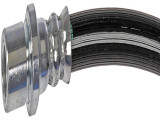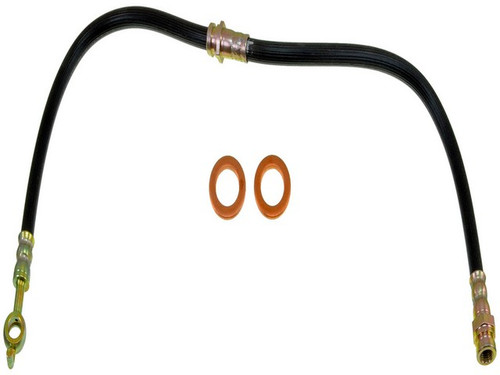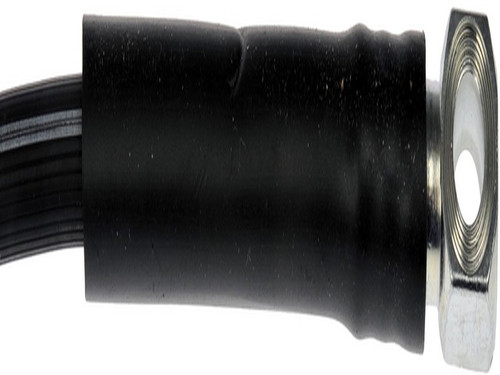
Dorman - First Stop Brake Hydraulic Hose P/N:H380512
Keep brake fluid moving to the front right wheel of your 1984-1992 Chevrolet Camaro or 1984-1992 Pontiac Firebird with this Dorman brake hydraulic hose, part number H38252 from the Dorman - First Stop line. It is a direct-fit replacement for the listed applications in the front right position. See the "Vehicles it fits" section for engine details.
A brake hydraulic hose is the flexible section of the brake system. It carries pressurized brake fluid to the wheel's brake while the wheel moves with the suspension and steering. Dorman built this hose as part of a complete brake repair:
Signs a brake hose may need replacing include cracks, bulges or fluid seepage along the hose, or a soft or spongy brake pedal. Other brake faults can cause similar symptoms, so inspect the system before replacing parts. After installation, bleed the brakes and follow the vehicle service information for the correct fittings and torque.
Interchange: 87-36040 · HB-82040 · 150.62040 · 350-47042
8736040 · HB82040 · 15062040 · 35047042 · 18J340 · B917140 · 610469 · 77400 · BH177400 · 17980324 · BH38252 · 2201119 · BH108907 · F108907
This part cross-references / interchanges with the following part numbers:
Will this brake hose fit my Camaro or Firebird?
It is listed for the front right position on the 1984-1992 Chevrolet Camaro and the 1984-1992 Pontiac Firebird. Check the "Vehicles it fits" section for engine details.
What does a brake hydraulic hose do?
It is the flexible section of the brake system. It carries pressurized brake fluid to the wheel's brake while the wheel moves with the suspension and steering.
What is this brake hose made of?
Dorman makes it with EPDM rubber and specially coated, corrosion-resistant fittings. Its materials are tested to government-regulated safety and durability standards.
What signs suggest a brake hose may need replacing?
Cracks, bulges or fluid seepage along the hose, or a soft or spongy pedal, may indicate a worn hose. Other brake problems can cause similar signs, so inspect the system first.
Do I need to bleed the brakes after installing it?
Yes. Replacing the hose opens the hydraulic system and lets air in, so bleed the brakes afterward and follow the vehicle service information for fittings and torque.
No reviews yet — be the first to review this product.
Write a Review
WARNING: These products can expose you to chemicals including lead and phthalates, which are known to the State of California to cause cancer and birth defects or other reproductive harm. For more information go to www.P65Warnings.ca.gov.