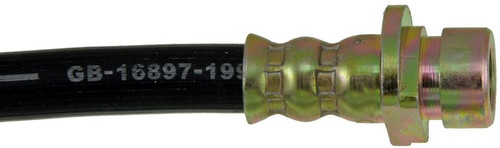
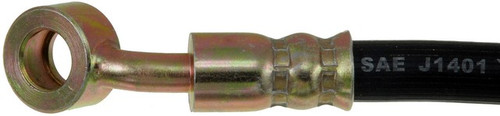
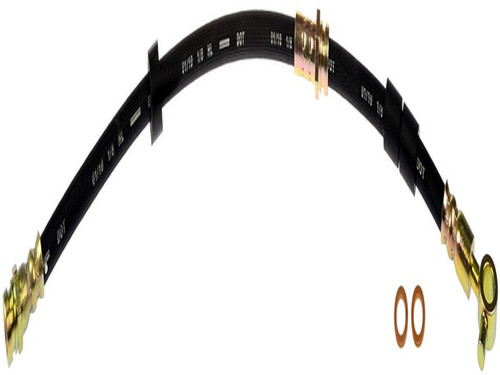
Dorman - First Stop Brake Hydraulic Hose P/N:H620017
$29.99
(You save)
Replace the worn flexible link between the rigid brake line and the caliper with the Dorman - First Stop Brake Hydraulic Hose H620017, a direct-fit replacement for the rear-left position on the 1999-2003 Acura TL [All]. This flexible hydraulic hose carries pressurized brake fluid from the hard line to the caliper while flexing with suspension and steering movement, and it is manufactured to precise measurements to drop into the rear-left location for an exact fit and easy installation.
Durable design: EPDM rubber hose with a rubber outer sleeve and treated-steel fittings that carry a corrosion-resistant coating.
Fitting layout: End 1 is a banjo fitting with a 10 mm thread; End 2 is a female fitting sized M10 x 1.0. Overall length 17.75 in, in black.
What's in the box: one brake hose plus gaskets and a stamped-steel bracket. Mounting hardware is not included — consult the vehicle service information for the correct fasteners and whether they may be reused.
Quality assured: DOT approved, with materials tested to government-regulated safety and durability standards.
Country of origin: China. As a best practice, inspect and service the brake hydraulic system as a complete job for balanced, dependable braking.
It carries pressurized brake fluid from the rigid brake line to the caliper while flexing with suspension and steering movement, maintaining the hydraulic connection in the brake system.
What vehicle and position does the H620017 fit?
It is a direct-fit replacement for the rear-left position on the 1999-2003 Acura TL [All]. See the Buyer's Guide tab to confirm fitment for your vehicle.
What comes in the box?
One brake hose plus gaskets and a stamped-steel bracket. Mounting hardware is not included; consult the vehicle service information for the correct fasteners.
What is this hose made of?
The hose is EPDM rubber with a rubber outer sleeve. It uses a treated-steel banjo fitting on End 1 and a treated-steel female fitting on End 2, both with a corrosion-resistant coating.
Is this hose DOT approved?
Yes. It is DOT approved, and its materials are tested to government-regulated safety and durability standards.
Write a Review
Dorman
Dorman - First Stop Brake Hydraulic Hose P/N:H620017
This automotive brake hydraulic hose was precision-engineered to match the fit, function and performance of the original brake hose on specific vehicles and positions to ensure safe, long-lasting...
This automotive brake hydraulic hose was precision-engineered to match the fit, function and performance of the original brake hose on specific vehicles and positions to ensure safe, long-lasting...
This automotive brake hydraulic hose was precision-engineered to match the fit, function and performance of the original brake hose on specific vehicles and positions to ensure safe, long-lasting...
WARNING:
These products can expose you to chemicals including lead and phthalates, which are known to the State of California to cause cancer and birth defects or other reproductive harm. For more information go to
www.P65Warnings.ca.gov.