Dorman - First Stop Brake Hydraulic Hose P/N:H620337
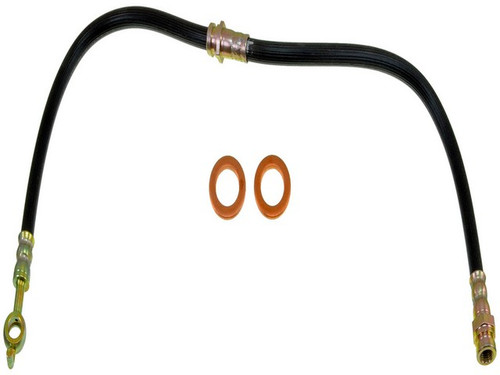
Keep hydraulic pressure moving to the rear brakes with the Dorman – First Stop Brake Hydraulic Hose H620019, a flexible EPDM rubber line that carries brake fluid between the hard line and the wheel end while flexing with suspension and steering movement. It installs at the rear left inner and rear right inner positions on the 2001–2006 Acura MDX [All] and 2003–2008 Honda Pilot [All].
This listing is the brake hose only — no mounting hardware, bracket, gasket/seal, or jacket is included; consult the vehicle service information for the correct fasteners and whether they may be reused. Signs a brake hose may need replacing include a bulging, cracked, or leaking hose and a soft or spongy pedal; diagnose the cause before replacing. Country of origin: China.
Interchange: B918120 · 611565 · HB-54044 · HB54044 · 78946 · 78947 · 150.40346 · BH414680 · 350-59149 · 35059149 · 01466S3VA00 · 01466S9VA00 · BH381586 · 2201988 · BH140342 · F140342. Manufacturer part number H620019.
This part cross-references / interchanges with the following part numbers:
Where does this brake hose install?
The catalog lists it for the rear left inner and rear right inner positions.
Which vehicles does the H620019 fit?
It fits the 2001–2006 Acura MDX [All] and the 2003–2008 Honda Pilot [All]. Check the Buyer's Guide tab to confirm your vehicle.
What is this hose made of, and is it DOT approved?
It is made with EPDM rubber and specially coated, corrosion-resistant treated-steel fittings, and it is DOT approved. Both ends use female fittings.
Does it come with mounting hardware, a bracket, or a gasket?
No. This listing is the brake hose only — no mounting hardware, bracket, gasket/seal, or jacket is included.
What are signs a brake hydraulic hose may need replacing?
Signs can include a bulging, cracked, or leaking hose and a soft or spongy pedal. Diagnose the cause before replacing, as other parts may be involved.
WARNING: These products can expose you to chemicals including lead and phthalates, which are known to the State of California to cause cancer and birth defects or other reproductive harm. For more information go to www.P65Warnings.ca.gov.