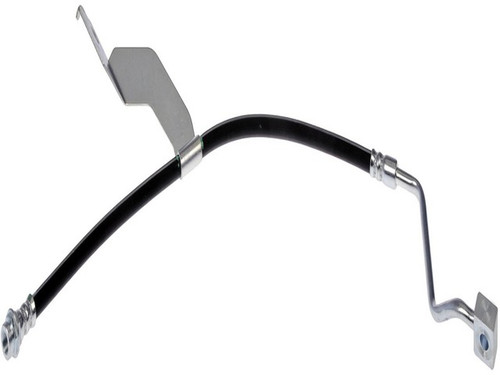
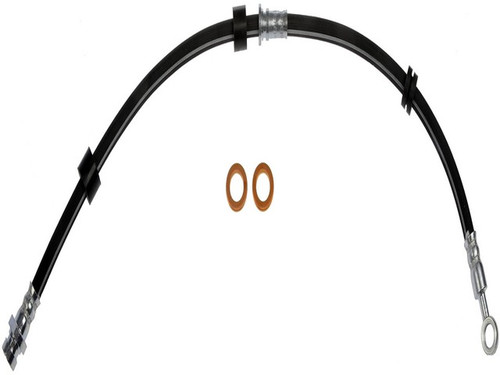
Renew the flexible link in your front brake circuit with this Dorman brake hydraulic hose, part number H621915 from the Dorman - First Stop line. It is a direct-fit replacement for the 2012-2018 Ford Focus, 2014-2023 Ford Transit Connect and 2013-2018 Ford C-MAX, and it is cataloged for both the front left and front right positions. See the "Vehicles it fits" section for engine details.
A brake hydraulic hose carries pressurized brake fluid between the vehicle's rigid brake lines and the brake at the wheel, and it flexes as the suspension travels and the wheels steer. Dorman engineered this hose to the original brake hose's fit, function and performance for specific vehicles and positions, and it is intended as part of a complete brake repair.
- Ideal replacement: precision-engineered to perform like the original brake hose on specific vehicles.
- Position-specific: built to precise measurements for an exact fit and easy installation.
- Quality assured: materials tested to exacting government-regulated safety and durability standards.
- Durable design: made with EPDM rubber and specially coated, corrosion-resistant fittings.
Signs that a brake hose may need replacing include cracks, bulges or chafing on the hose, brake fluid seeping at the fittings, or a soft or spongy pedal. If a worn hose is the cause, this part replaces it. Inspect the rest of the brake system as well.
Interchange: 150.61133 · 350-54095
15061133 · 35054095 · 614316 · CV6Z2078A · BH383714 · 2206134 · BH144682 · F144682
This part cross-references / interchanges with the following part numbers:
614316, 150.61133, 350-54095, CV6Z2078A, BH383714, 2206134, BH144682, F144682
Frequently Asked Questions
Which Ford vehicles does the H621915 brake hose fit?
It is a direct-fit replacement for the 2012-2018 Ford Focus, 2014-2023 Ford Transit Connect and 2013-2018 Ford C-MAX, in the front left or front right position. Check the "Vehicles it fits" section to confirm your vehicle.
What does a brake hydraulic hose do?
It carries pressurized brake fluid between the rigid brake lines and the brake at the wheel, and it flexes as the suspension moves and the wheels steer.
What is this hose made of?
Dorman makes it with EPDM rubber and specially coated, corrosion-resistant fittings. Its materials are tested to government-regulated safety and durability standards.
What are signs a brake hose may need replacing?
Look for cracks, bulges or chafing on the hose, fluid seeping at the fittings, or a soft, spongy pedal. Diagnose the cause first, because other brake parts can produce similar symptoms.
Do I need to bleed the brakes after installing it?
Yes. Opening the hydraulic system lets air in, so bleed the brakes as the vehicle service information directs. Use the fasteners and any sealing washers it specifies, and follow it on whether the originals may be reused.