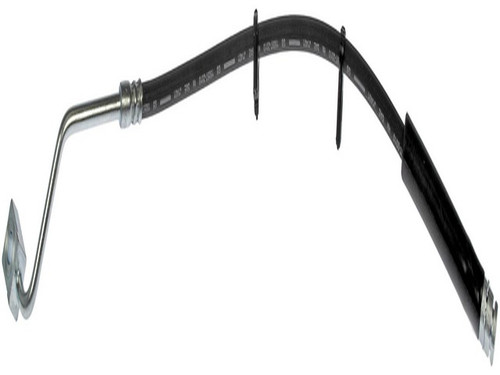
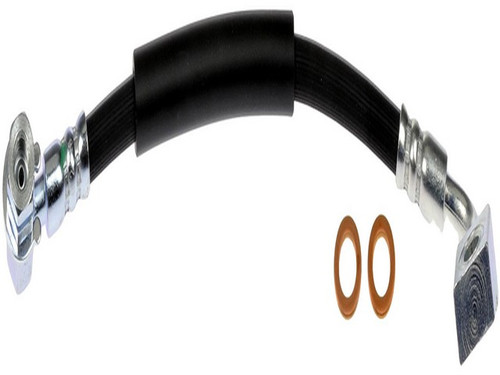
Carry pressurized brake fluid to the front brakes with the Dorman brake hydraulic hose H622044, from the Dorman - First Stop line. It is a direct-fit replacement for the 2013-2018 Ford Escape and is listed for both the front left and front right positions. See the Buyer's Guide tab for engine details.
A brake hydraulic hose is the flexible link that carries fluid under pressure to the brake and moves with the suspension and steering. Dorman precision-engineered this hose to fit, function and perform like the original brake hose on specific vehicles and positions. It is designed for safe, durable service as part of a complete brake repair.
- Ideal replacement: engineered to perform like the original brake hose on the listed applications.
- Position-specific: made to precise measurements for an exact fit and straightforward installation.
- Quality assured: its materials are tested to exacting government-regulated safety and durability standards.
- Durable design: made with EPDM rubber and fitted with specially coated, corrosion-resistant fittings.
A brake hose may need replacing if the rubber is cracked or bulging, fluid seeps at the hose or fittings, the pedal feels soft or spongy, or the vehicle pulls to one side under braking. The same hose is listed for both front positions, so consider inspecting and replacing the left and right hoses together. After installation, bleed the brake system following the vehicle service information.
Interchange: 150.65231 · 350-54457
614344 · CV6Z2078B · BH383808 · 2206147 · BH144560 · F144560 · 15065231 · 35054457
This part cross-references / interchanges with the following part numbers:
614344, 150.65231, 350-54457, CV6Z2078B, BH383808, 2206147, BH144560, F144560