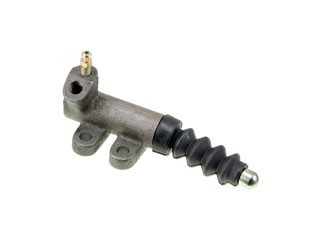
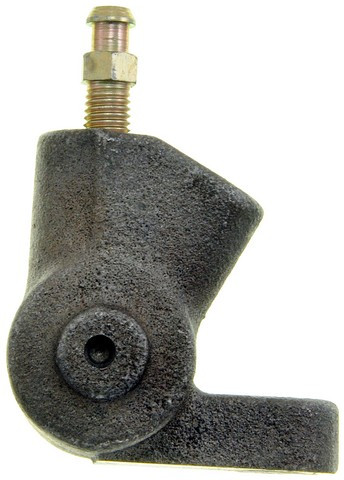
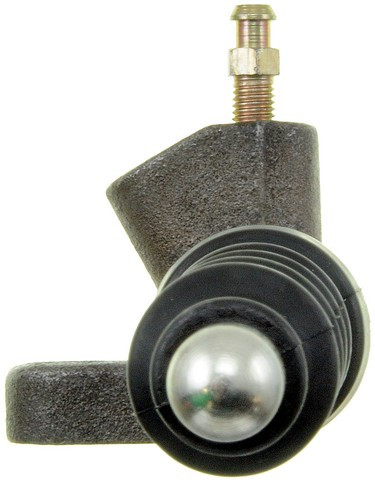
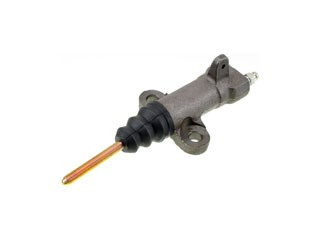
Keep hydraulic clutch release working the way it should with the Dorman - First Stop Clutch Slave Cylinder CS650069. Engineered to match the original equipment design as a direct replacement, it drops in across a range of Ford, Mazda and Mercury models — including the 1997-2003 Ford Escort [L4-2.0L], 2006-2010 Ford Fusion [L4-2.3L, L4-2.5L, V6-3.0L, V6-3.5L], 2003-2016 Mazda 6 [L4-2.3L, L4-2.5L, V6-3.0L, V6-3.7L], 2006-2009 Mercury Milan [L4-2.3L, V6-3.0L] and 1997-1999 Mercury Tracer [L4-2.0L]. See the "Vehicles it fits" section for the full list.
On the release side of the clutch system, the slave cylinder converts fluid pressure sent from the clutch master cylinder into the mechanical movement that disengages the clutch. If a leaking or worn slave cylinder is behind a soft pedal or trouble shifting, this unit replaces the failed part.
- Direct replacement: built to match the original clutch slave cylinder on the listed vehicles.
- Precise design: reverse-engineered from the original equipment to fit and function reliably.
- 0.75 in inside diameter bore.
- High-grade rubber components: compatible with standard brake fluid.
- Backed by a team of engineers and quality control experts in the United States.
Country of origin: China.
Interchange: S0711 · 072-9565 · 0729565 · 138.45405 · SC551750 · SC551900 · 1S4Z7A512AA · F7CZ7A508AC · LSC414 · BTAB41920B · BTAB41920D · 900050 · F140589 · F143563 · SC140589 · SC143563. Manufacturer part number CS650069.
This part cross-references / interchanges with the following part numbers:
S0711, 072-9565, 138.45405, SC551750, SC551900, 1S4Z7A512AA, F7CZ7A508AC, LSC414, BTAB41920B, BTAB41920D, 900050, F140589, F143563, SC140589, SC143563
Frequently Asked Questions
What does this clutch slave cylinder do?
It converts hydraulic pressure sent from the clutch master cylinder into the mechanical movement that disengages the clutch when you press the pedal.
Which vehicles does the CS650069 fit?
It's a direct replacement for listed Ford Escort, Ford Fusion, Mazda 6, Mercury Milan and Mercury Tracer applications. Check the "Vehicles it fits" section for the exact years and engines.
What is the bore size?
The catalog lists a 0.75 in inside diameter for this clutch slave cylinder.
What fluid does it use?
It includes high-grade rubber components compatible with standard brake fluid, the hydraulic fluid used in the clutch release system.
How do I know if it may need replacing?
Common signs include fluid leaks at the cylinder, a soft or spongy clutch pedal, or difficulty disengaging the clutch. Diagnose the cause before replacing.