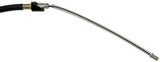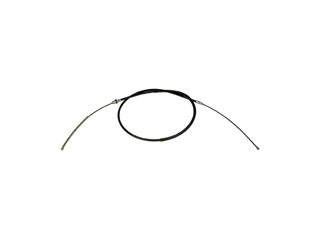
Dorman - First Stop Parking Brake Cable P/N:C92836
Hold your truck firmly in place with the Dorman - First Stop Parking Brake Cable C93938. This rear left parking brake cable transmits the pull from the parking brake lever to the rear brake, applying the mechanical force that keeps the vehicle from rolling when parked. It drops in as a direct-fit replacement built and tested to match the original cable's fit, function and performance on the 1990-1992 Chevrolet C1500 and K1500 and the 1990-1992 GMC C1500 and K1500 [All engines].
If a stretched, seized, or corroded cable is the cause of a parking brake that won't hold, feels loose, or won't fully release, this cable replaces it. Diagnose the cause before replacing. Country of origin: China.
Interchange: 18P938 · C913190 · BC-86124 · BC86124 · C1476 · 157.93938 · BC83938 · 15607681 · CA-6184 · CA6184 · BC93938 · BC128657 · F128657 · Manufacturer part number C93938
This part cross-references / interchanges with the following part numbers:
What does this parking brake cable do?
It transmits the pull from the parking brake lever to the rear brake, applying the mechanical force that holds the vehicle in place when parked. This unit is the rear left cable.
Which vehicles does the C93938 fit?
It is a direct-fit replacement for the 1990-1992 Chevrolet C1500 and K1500 and the 1990-1992 GMC C1500 and K1500 [All engines]. See the Buyer's Guide tab to confirm your vehicle.
Is mounting hardware included?
No, mounting hardware is not included. The conduit is included. Consult the vehicle service information for the correct fasteners and whether they may be reused.
How long is the cable?
It has an overall length of 84.76 in with a 56.49 in conduit length, a rubber outer sleeve, and a black housing.
What are signs this cable may need replacing?
A parking brake that won't hold, feels loose, or won't fully release can point to a stretched, seized, or corroded cable. Diagnose the cause before replacing.
WARNING: These products can expose you to chemicals including lead and phthalates, which are known to the State of California to cause cancer and birth defects or other reproductive harm. For more information go to www.P65Warnings.ca.gov.