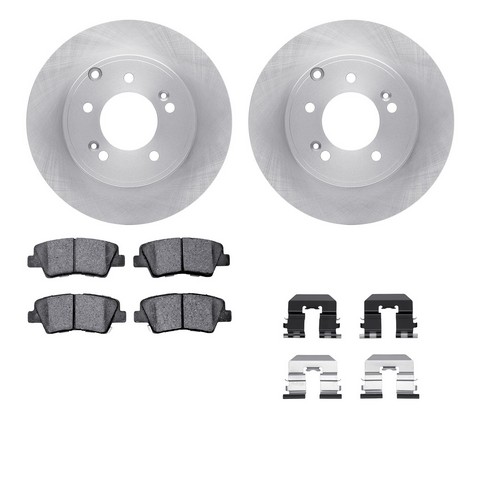
Dynamic Friction Company Disc Brake Kit P/N:6512-03261

Be the first to review this product
$118.99
MPN: 6512-03261
Item Package Quantity: 1
Adding to cart… The item has been added

Have questions?

Dynamic Friction Company Disc Brake Kit P/N:6512-03261
$118.99

Handle a complete rear brake service with the Dynamic Friction Company Disc Brake Kit (P/N 6512-03261) — a DYNAMIC FRICTION brake kit that bundles a DFC brake rotor, 5000 series brake pads, and a hardware kit together in one box. It installs as a direct-fit replacement for the rear axle of the 2009-2011 Hyundai Azera and the 2008-2010 Hyundai Sonata; see the Buyer's Guide tab to confirm the engine for your vehicle.

  • Rotor, pads and hardware together: combines the DFC brake rotor, 5000 series brake pads, and a hardware kit so the matching wear components are sourced in a single part number.
  • Rear-axle application: cataloged for the rear position on the listed Hyundai applications.
  • 5000 series brake pads: the kit's braking friction is DFC's 5000 series pad, packaged alongside the rotor.
  • Bundled hardware: the included hardware kit supplies pieces used during the rear brake job.

Shopping for a Hyundai Sonata brake kit means gathering the rotor, pads, and hardware separately — this listing pulls them into one direct-fit package for the listed applications. Replace the rear rotors and pads as a matched set for even, balanced braking.

Frequently Asked Questions

What's included in this disc brake kit?

This kit bundles a DFC brake rotor, DFC 5000 series brake pads, and a hardware kit, packaged together under one part number for the rear axle.

Which vehicles does the Dynamic Friction 6512-03261 fit?

It's a rear-axle direct-fit for the 2009-2011 Hyundai Azera and the 2008-2010 Hyundai Sonata. Check the Buyer's Guide tab for engine details.

Is this a front or rear brake kit?

It is cataloged for the rear axle on the listed Hyundai applications.

Should I service both sides of the axle at once?

Replacing the rear rotors and pads as a matched set is recommended for even, balanced braking rather than doing one side alone.

What are signs my rear pads or rotors may need replacing?

Squealing or grinding, longer stopping distances, pedal or steering-wheel vibration, or visible wear can all be signs the rear pads or rotors may need service.