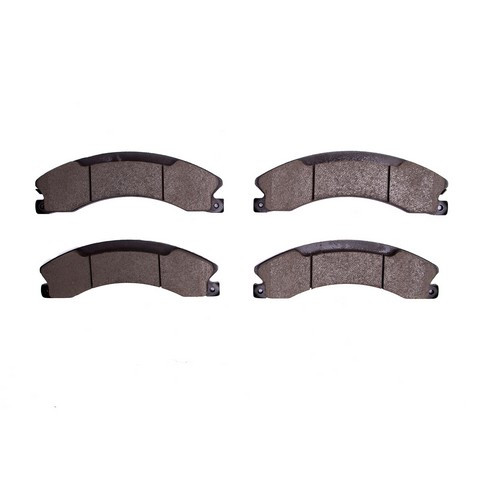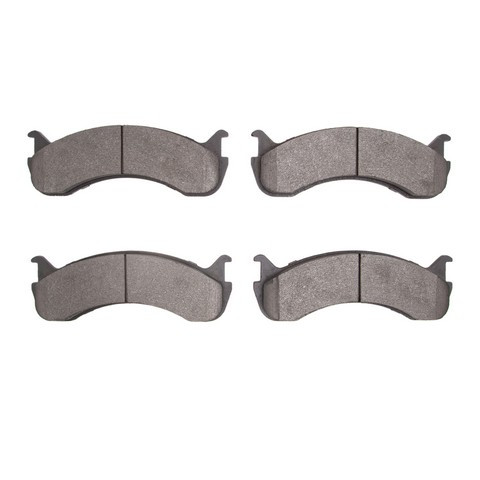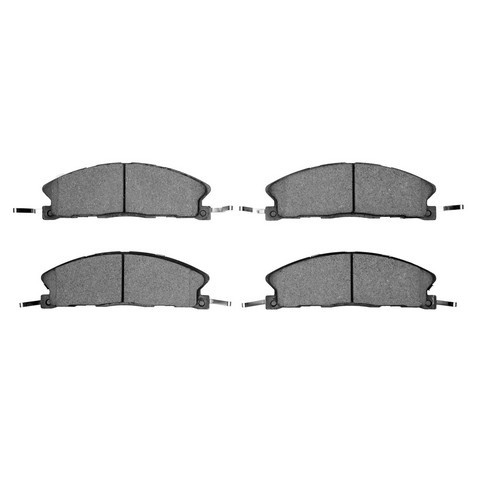
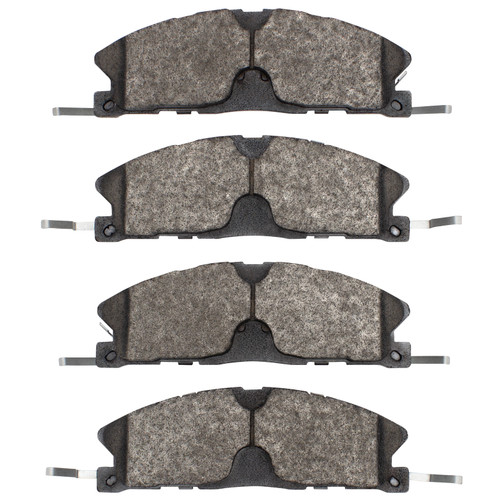
Dynamic Friction Company Disc Brake Pad Set P/N:4000-1611-10
Built for hard work, the Dynamic Friction Company (DFC) Heavy Duty front brake pads, part number 1214-1611-10, are designed to deliver strong, predictable friction for demanding driving. It is a direct-fit replacement for the listed applications and fits many vehicles, among them the 2013-2019 Ford Explorer, 2013-2019 Ford Taurus and 2013-2019 Ford Flex. See the "Vehicles it fits" section for the full list and engine details.
DFC designed these semi-metallic pads so their friction level stays strong and predictable regardless of temperature, speed or axle load.
When you press the brake pedal, each pad clamps against the front rotor and creates the friction that slows the wheel. If your front pads are worn thin or have started squealing or grinding, this disc brake pad set replaces them with a heavy-duty semi-metallic option.
What does a front brake pad set do?
When you press the pedal, the pads clamp against the front brake rotors and create the friction that slows and stops the vehicle.
What friction material do these DFC pads use?
They are semi-metallic Heavy Duty pads. DFC engineered them to withstand extremely high operating temperatures while keeping dust and noise low.
Are these pads suited to towing or heavy use?
Yes. DFC designed them for extreme braking environments, including high speed, heavy traffic, steep gradients, towing and off-roading.
Is this the right Ford Explorer brake pad for my 2013-2019 model?
It is listed as a front pad for the 2013-2019 Ford Explorer. The "Vehicles it fits" section shows the engine details for each listed vehicle.
What are signs my front brake pads may need replacing?
Common signs include squealing or grinding when braking, longer stopping distances, a vibrating pedal, and pads that look thin on inspection. Have the brakes checked to confirm the cause.
No reviews yet — be the first to review this product.
Write a Review
WARNING: These products can expose you to chemicals including lead and phthalates, which are known to the State of California to cause cancer and birth defects or other reproductive harm. For more information go to www.P65Warnings.ca.gov.