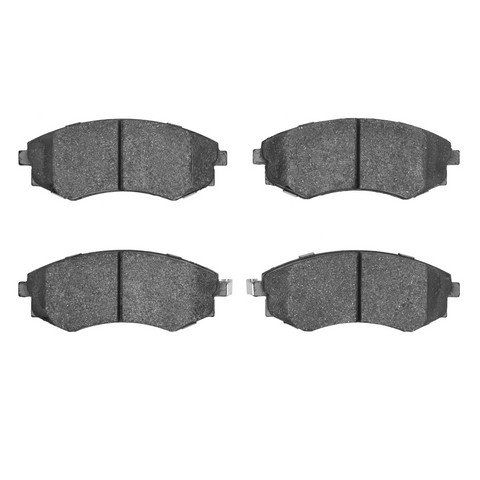
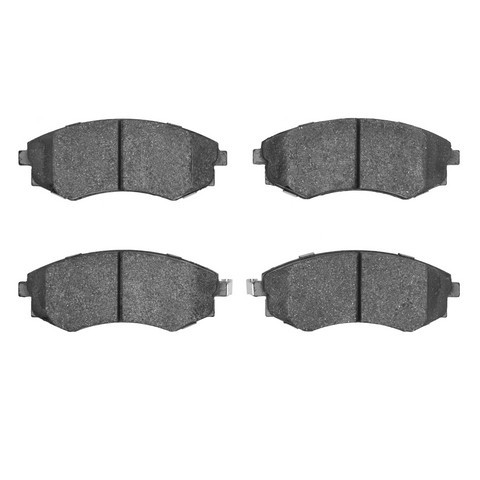
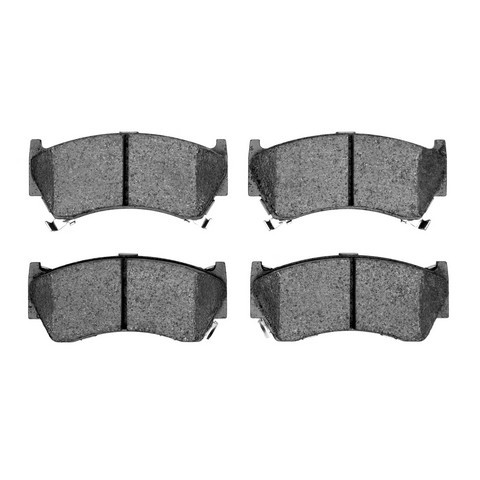
Built for a consistent pedal feel and sharp brake response, the Dynamic Friction Company DFC 5000 Advanced Brake Pads, part number 1551-0700-00, are a ceramic front disc brake pad set. They fit many vehicles, among them the 1992-2001 Hyundai Elantra, 2000-2006 Nissan Sentra and 2001-2002 Kia Optima. See the Buyer's Guide tab for the full list and engine details.
- Consistent pedal feel: Designed to give a steady pedal feel and superb brake response.
- Axle-specific formulation: Formulated for each axle on every vehicle, using selected original equipment manufacturer formulations.
- Made for modern braking systems: Uses selected friction materials designed to meet the demands of modern vehicles with ABS and automated braking systems.
- Long wear, rotor friendly: Built for long pad wear and described by the manufacturer as rotor friendly.
When the caliper applies, brake pads press against the rotor and turn the vehicle's motion into heat to slow it down. As an Elantra brake pad, or for any of the other listed applications, this ceramic set installs at the front axle. Replacing the pads on both front wheels at the same time is recommended for even, balanced braking.
Front pads may need replacing if you hear squealing or grinding when braking, notice a longer stopping distance, or see that the friction material has worn thin.