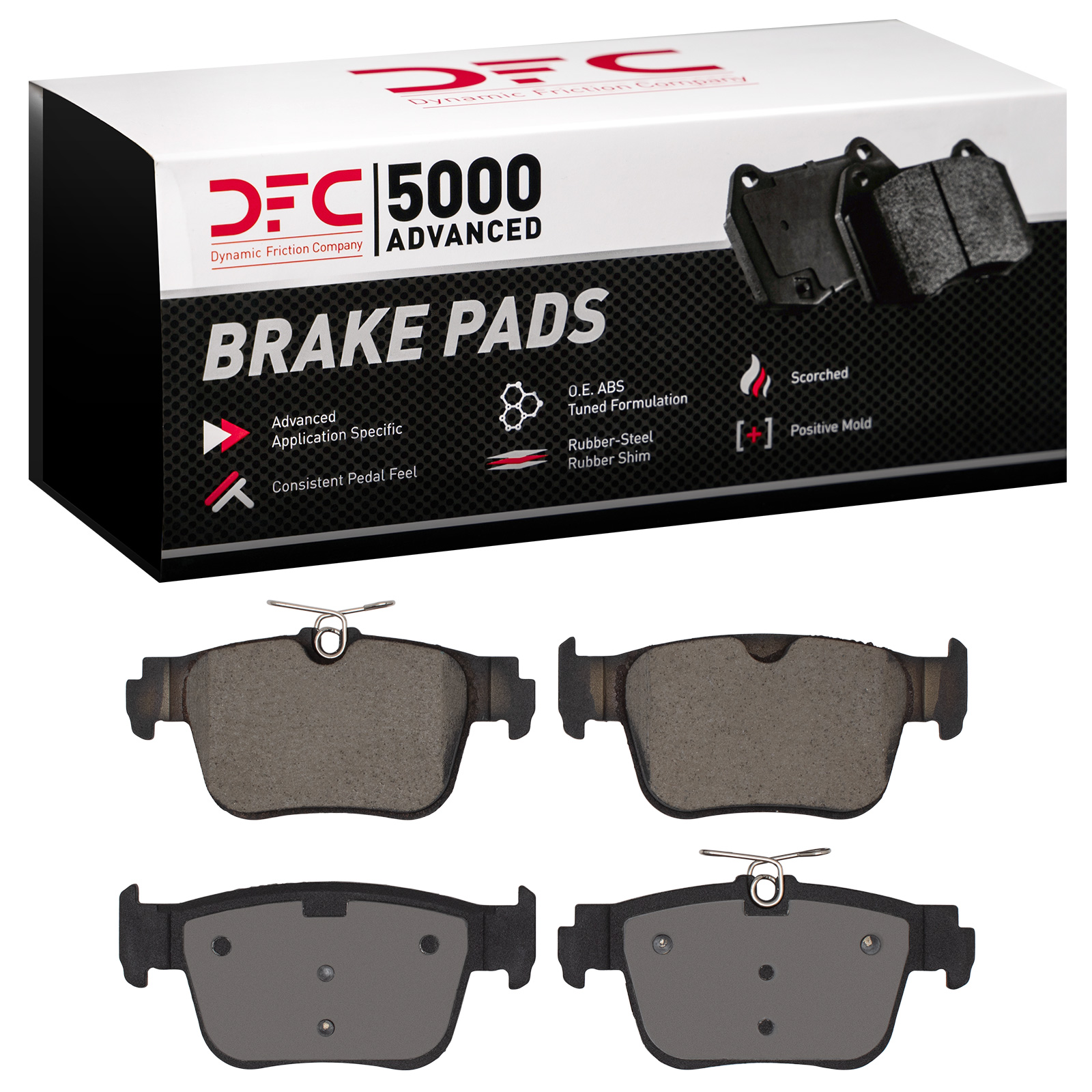
Dynamic Friction Company Disc Brake Pad Set P/N:1551-2433-00
$45.99
(You save)
Bring smooth, low-dust stopping back to your rear axle with the Dynamic Friction DFC 5000 Advanced Ceramic Disc Brake Pad Set (P/N 1551-2433-00) — a direct-fit set of brake pads Audi Q3 and other listed models rely on. These rear ceramic pads deliver quieter stops and lighter, less-visible dust compared with conventional semi-metallic pads, plus a smooth, consistent pedal feel during everyday street driving.
Consistent pedal feel: designed to deliver a steady pedal and responsive braking.
Rotor friendly & long-wearing: ceramic formulation intended for long pad life while staying easy on rotors.
Axle-specific formula: friction material is formulated for each axle on the vehicle.
Modern-system ready: selected friction materials are designed to meet the demands of modern vehicles with ABS and automated braking systems, using selected original-equipment formulations.
This rear set fits the 2026 Audi Q3, 2022-2026 Audi S3, 2022-2025 Volkswagen Golf R, 2022-2025 Volkswagen GTI, 2020-2024 Cupra Ateca, 2020-2024 Cupra Leon, and 2022-2023 Cupra Formentor. See the Buyer's Guide tab for engine-level fitment and the full application list. For even, balanced braking, replace the pads on both sides of the axle together as a matched set.
Frequently Asked Questions
Are these rear brake pads for the Audi Q3?
Yes. This set installs on the rear axle and is listed for the 2026 Audi Q3, along with the Audi S3, Volkswagen Golf R and GTI, and several Cupra models. Check the Buyer's Guide tab to confirm your exact vehicle.
What are these brake pads made of?
They use the DFC 5000 Advanced ceramic friction formulation, designed for quieter stops and lower, less-visible dust than conventional semi-metallic pads during everyday street driving.
Will these ceramic pads be gentle on my rotors?
They are formulated to be rotor friendly and designed for long pad wear, helping deliver a consistent pedal feel over daily use.
Do these work with ABS and automated braking systems?
Yes. The friction materials are selected to meet the demands of modern vehicles equipped with ABS and automated braking systems, using original-equipment formulations.
How much do Audi Q3 brake pads cost, and do I need two sets?
Pricing is shown above for this rear set. This listing covers the rear axle; for balanced braking, replace both sides together as a matched set. See the Buyer's Guide tab to confirm fitment.
Write a Review
DYNAMIC FRICTION
Dynamic Friction Company Disc Brake Pad Set P/N:1551-2433-00
Keep your Genesis brake pads quiet and low on dust with the Dynamic Friction Company DFC 5000 Advanced Ceramic Brake Pads, part number 1551-1551-00. This rear-axle disc brake pad set drops in as a...
Shopping for chevy Traverse brake pads that stay quiet and clean? The Dynamic Friction DFC 5000 Advanced Ceramic Disc Brake Pad Set (P/N 1551-2303-00) is a rear-axle ceramic pad set that drops in as...
Fit a fresh Nissan Versa brake pad set to the front axle with the Dynamic Friction Company DFC 5000 Advanced Ceramic Disc Brake Pad Set (MPN 1551-2038-00). This front disc brake pad set drops in as a...
WARNING:
These products can expose you to chemicals including lead and phthalates, which are known to the State of California to cause cancer and birth defects or other reproductive harm. For more information go to
www.P65Warnings.ca.gov.