Front Brake Pad for 2013-2017 Audi Q5 & More - Dynamic Friction 1600-1663-00

Be the first to review this product
$74.99
MPN: 1600-1663-00
UPC: 190920608117
Item Package Quantity: 1
Adding to cart… The item has been added

Have questions?

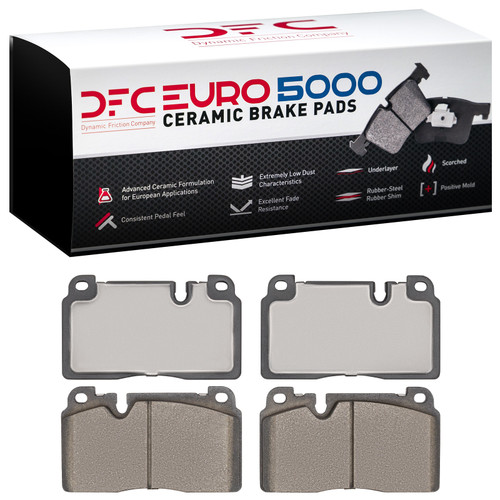
Dynamic Friction Company Disc Brake Pad Set P/N:1600-1663-00
$74.99

Looking for a front 2013-2017 Audi Q5 brake pad that also fits the 2017-2020 Porsche Macan? The Dynamic Friction Company 1600-1663-00 from the DFC EURO 5000 ceramic line uses a formulation developed for European applications, with low dust and stable friction across a wide temperature range. This disc brake pad set is a direct-fit replacement for the front brakes of the 2013-2017 Audi Q5 and 2017-2020 Porsche Macan. See the Buyer's Guide tab for engine details.

  • Advanced ceramic formulation: developed for European applications.
  • Fade resistance: DFC describes the formulation's fade resistance as excellent.
  • Low dust: the ceramic formulation is designed to produce low brake dust.
  • Stable friction: stable friction performance across a wide temperature range.

Brake pads press against the rotors to slow the vehicle, and the friction material wears down with every stop. Signs the pads may need replacing include squealing or grinding when braking, a longer stopping distance, or friction material that looks thin on inspection. Replacing the pads on both sides of the axle together is recommended for even, balanced braking, and a pad change is a good time to inspect the rotors and brake hardware.

Frequently Asked Questions

Is this a good pick for a 2013-2017 Audi Q5 brake pad replacement?

Yes. It is a direct-fit front replacement for the 2013-2017 Audi Q5, and it also fits the 2017-2020 Porsche Macan. See the Buyer's Guide tab for engine details.

Are these front or rear brake pads?

They are cataloged for the front brakes on the listed applications.

What friction material do these pads use?

They use DFC's EURO 5000 advanced ceramic formulation for European applications. It offers low dust, excellent fade resistance and stable friction across a wide temperature range.

What are signs my brake pads may need replacing?

Common signs include squealing or grinding when braking, a longer stopping distance, or friction material that looks thin on inspection.

What should I check when installing new pads?

Follow the vehicle's service information and inspect the rotors and brake hardware. Replacing the pads on both sides of the axle together is recommended for even, balanced braking.