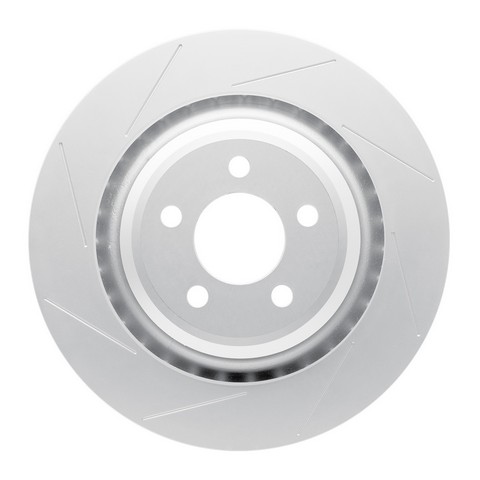
Dynamic Friction Company Disc Brake Rotor P/N:614-39020
Keep your rear brakes biting smoothly with Dynamic Friction Dodge Charger rotors — the DFC Slotted Hi-Carbon Alloy Disc Brake Rotor (P/N 910-39020, also written 91039020). It's a rear-position direct-fit replacement for the 2006-2010 and 2012-2023 Dodge Charger, 2008-2020 Dodge Challenger, 2006-2008 Dodge Magnum, and the 2005-2010 and 2012-2014 Chrysler 300.
As a rear disc brake rotor, this Dodge Charger brake rotor gives your brake pads a stable friction surface to clamp, converting motion into heat during braking. Rotors wear as a set, so it's best to replace the rear pair together for even, balanced braking; they're sold individually and this listing is for one. See the Buyer's Guide tab for engine specifics.
Is the DYNAMIC FRICTION brake rotor 910-39020 a front or rear rotor?
It's a rear-position brake rotor for the listed applications, with a slotted, Geomet®-coated face and an OE vane configuration for heat dissipation.
What vehicles does this Chrysler 300 brake rotor fit?
It fits the 2005-2010 and 2012-2014 Chrysler 300, 2006-2010 and 2012-2023 Dodge Charger, 2008-2020 Dodge Challenger, and 2006-2008 Dodge Magnum. See the Buyer's Guide tab for engine specifics.
Should I replace both rear rotors at the same time?
It's best practice to replace rear rotors as a matched pair for even, balanced braking, even though they're sold individually and this listing is for one.
Is this a slotted rotor?
Yes. It's a slotted DFC Hi-Carbon Alloy rotor cast from premium G3000/G11H18 iron and Geomet® coated for high-performance corrosion protection.
Should I buy Dodge Charger brake pads and rotors together?
This listing is for the rotor only; pads aren't included. Inspect your pads when replacing rotors and replace worn ones, since fresh pads help seat properly against a new friction surface.
WARNING: These products can expose you to chemicals including lead and phthalates, which are known to the State of California to cause cancer and birth defects or other reproductive harm. For more information go to www.P65Warnings.ca.gov.