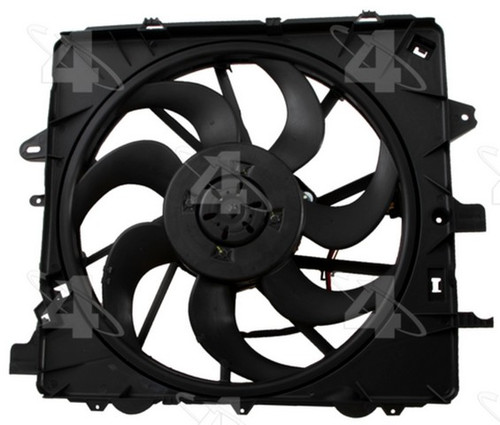
Four Seasons 75401 radiator fan for the 2010 Hyundai Elantra 4-cylinder 2.0L moves air through the radiator to help cool the engine. It supplies airflow when little air passes through the radiator, such as at idle or in slow traffic.
- Two fans in a single motor assembly
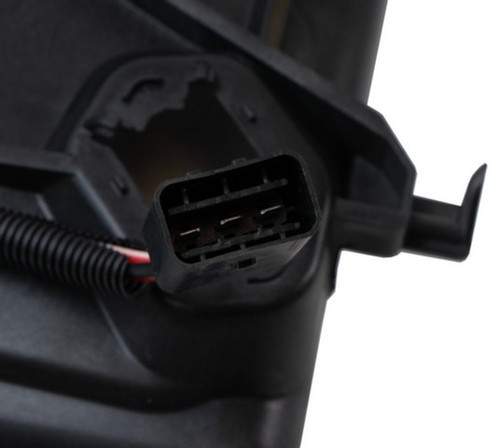
- 12-volt motor with 3 male terminal pins and 2 connectors
- Plastic and metal construction
- Ready for out-of-box installation
Quick facts
- Part: Four Seasons 75401 radiator fan
- Also called: cooling fan assembly
- Fits: 2010 Hyundai Elantra 4-cylinder 2.0L
- Material: Plastic / Metal
- Condition: New
Overheating in slow traffic, a fan that stays still on a hot engine, or a noisy motor can mean this fan is worn, though a failed fan relay or a faulty coolant temperature sensor can be behind those signs too.
Fits
It fits the 2010 Hyundai Elantra 4-cylinder 2.0L, which takes one. Its design and performance meet or exceed O.E. levels, and the motor RPM equals or exceeds that of the OEM motor.
Specifications
Fit and size
- Quantity per vehicle: 1
- Fan quantity: 2
- Voltage: 12 V
- Terminal pins: 3
- Terminal gender: male
- Connector quantity: 2
- Mount type: OE mount
Build and materials
- Type: motor assembly
- Material: plastic / metal
- Shroud material: plastic
- Mounting hardware: not included
- Condition: new
- Country of origin: Taiwan
In the box
One radiator fan. Mounting hardware is not included, and the old hardware may not be reusable, so plan on new pieces.
Interchange: 253802H160 · A19446 · 850353 · HN67017B
This part cross-references / interchanges with the following part numbers:
75401, 253802H160, A19446, 850353, HN67017B
Frequently Asked Questions
Is the Four Seasons 75401 the right radiator fan for the 2010 Hyundai Elantra 4-cylinder 2.0L?
Yes. The Four Seasons 75401 fits the 2010 Hyundai Elantra 4-cylinder 2.0L, and that car takes one.
Does the Four Seasons radiator fan come with mounting hardware?
No. The Four Seasons 75401 comes without mounting hardware, so plan on new fasteners; the old ones may not be reusable.
Is this cooling fan assembly a 12-volt unit with two fans?
Yes. This assembly runs on 12 volts and has two fans, with 3 male terminal pins and 2 connectors.
How can I tell if the radiator fan is going bad?
Overheating in slow traffic, a fan that stays still when the engine is hot, or noise from the motor can mean the fan is worn. Testing it needs the engine running, so a shop can do that.
Is 253802H160 an interchange number for this radiator fan?
Yes. 253802H160 is listed as an interchange number for the Four Seasons 75401, along with A19446, 850353 and HN67017B.