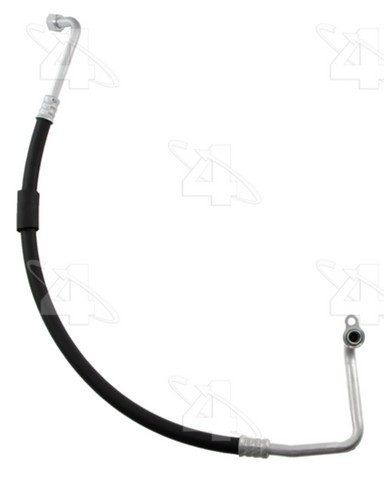
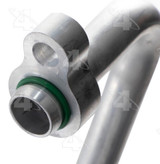
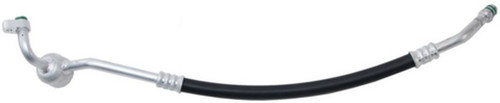
Four Seasons A/C Refrigerant Suction Hose P/N:66696
Four Seasons 66686 A/C refrigerant suction hose for the 2002-2008 Mini Cooper 4-cylinder 1.6L carries refrigerant gas back toward the compressor on the low-pressure side of the A/C system.
A leaking suction hose can show up as oily residue at a fitting, a cracked or damaged hose, or A/C that blows warm. Those signs alone do not prove the hose is at fault, since a leaking condenser could also leave the system low on refrigerant.
This hose is a direct-fit replacement for the 2002-2008 Mini Cooper 4-cylinder 1.6L, which takes one.
Fit and size
Build and materials
One A/C refrigerant suction hose with a muffler, two 24150 O-rings and gaskets or seals. A bracket and a service port are not included.
Interchange: 64509181966 · 64531504541 · 64536982880 · 785906 · 4814140 · 211597 · A83204 · HA113576C
This part cross-references / interchanges with the following part numbers:
Is the Four Seasons 66686 suction hose right for the 2002-2008 Mini Cooper 4-cylinder 1.6L?
Yes. Four Seasons 66686 is an application specific suction hose for the 2002-2008 Mini Cooper 4-cylinder 1.6L, and that car takes one.
Does the 66686 suction hose come with O-rings and a bracket?
Four Seasons 66686 includes two 24150 O-rings plus gaskets or seals, and it has a muffler. A bracket and a service port are not included.
Which refrigerants can this double wall suction hose handle?
The double wall barrier hose is compatible with R1234YF, R134A or R12. R134A is the listed refrigerant type for this hose.
Is oily residue on the suction hose or its fittings a sign of a leak?
It can be. With the engine off and cool, look for oily residue, cracks or damage on the hose and at its fittings. A shop can leak-test the A/C system.
Does Four Seasons 66686 replace A83204?
Yes. A83204 is one of the numbers this suction hose replaces, along with 785906 and 211597.
No reviews yet — be the first to review this product.
Write a Review
WARNING: These products can expose you to chemicals including lead and phthalates, which are known to the State of California to cause cancer and birth defects or other reproductive harm. For more information go to www.P65Warnings.ca.gov.