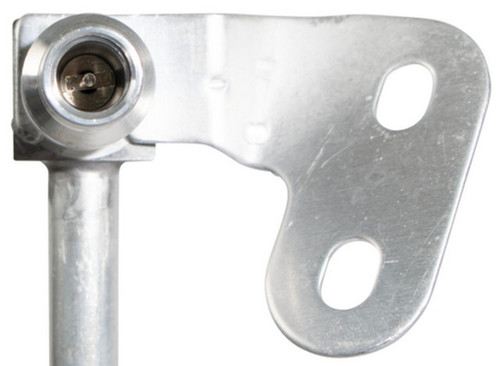
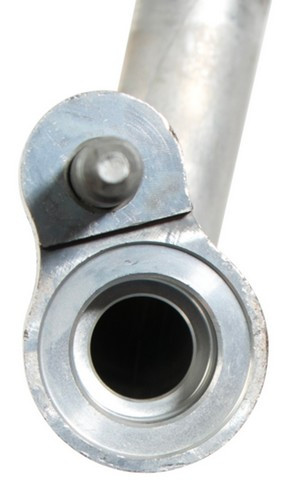
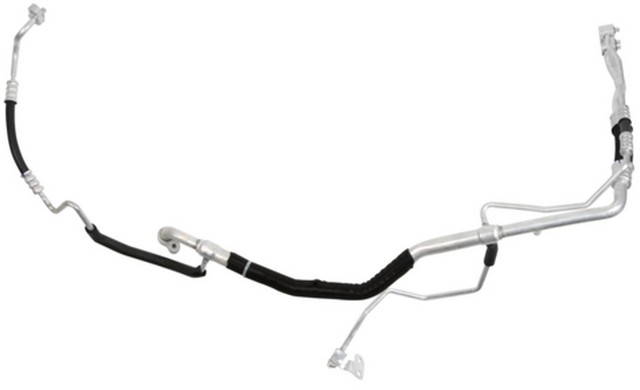
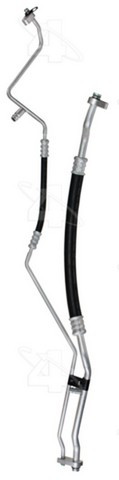
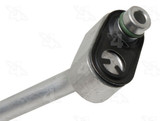
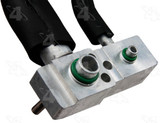
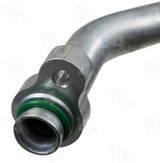
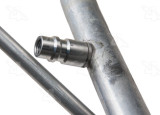
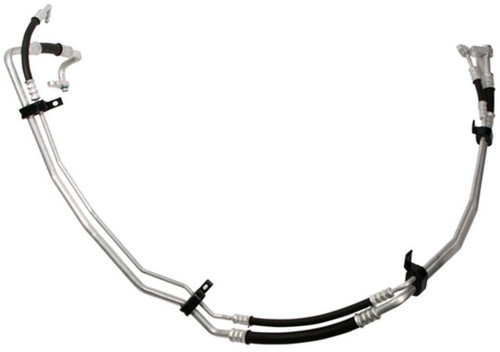
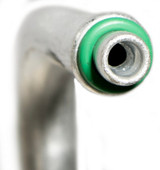
Four Seasons 65316 a/c suction and liquid line hose assembly for the 2018-2020 Chevrolet Impala is an internal heat exchange hose assembly that carries refrigerant between parts of the A/C system.
- Engineered and tested for trouble-free operation, with over 50 years of mobile A/C experience behind it
- Contains gaskets, o-rings or seals to replace the assembly properly
- Double wall barrier hose compatible with R1234YF, R134A or R12
- Crimp fitting connection
- Application specific design
Also called an A/C suction line, it can show wear as refrigerant leaks at the hose or fittings, oily residue at a connection, or A/C that blows warm. Before you replace it, rule out a low refrigerant charge, a leaking condenser or a failing compressor, since any of those can leave the cabin warm too. If this assembly is the source of the leak, it replaces it. A shop should handle the refrigerant recovery.
It fits the 2018-2020 Chevrolet Impala.
Specifications
Fit and size
- Type: suction and liquid line internal heat exchange hose assembly
- Connection: crimp fitting
- Design: application specific
Build and materials
- Hose construction: double wall barrier hose
- Refrigerant compatibility: R1234YF, R134A or R12
In the box
This listing holds one hose assembly.
Interchange: 1535028 · 84123593 · 84429956 · 84517947 · 212610 · A66203 · HA114418C
This part cross-references / interchanges with the following part numbers:
1535028, 65316, 84123593, 84429956, 84517947, 212610, A66203, HA114418C