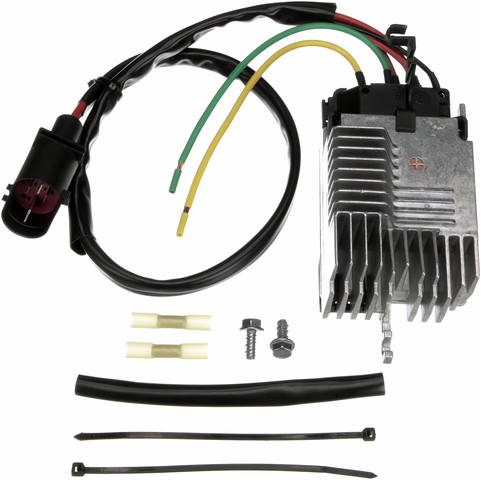
Gates Engine Cooling Fan Module P/N:FCM122K
Gates FCM154 cooling fan module for the 2002 Audi A4 4-cylinder 1.8L or V6 3.0L and other vehicles controls the electric fan that keeps engine coolant at a steady temperature. It is designed to set fan speed precisely, to minimize energy loss and maximize fuel economy.
A hot-running engine, or a fan that never starts or never stops, can be a sign of a faulty engine cooling fan module. Before replacing it, look over the connector and wiring with the engine off and cool; corrosion, melted plastic or a loose plug can upset the fan even when the module is sound. A shop can test the fan circuit.
This OE-performance replacement module fits the 2002 Audi A4 4-cylinder 1.8L or V6 3.0L and the 2002 Audi A4 Quattro 4-cylinder 1.8L or V6 3.0L. Only one module is needed per car.
Fit and size
Build and materials
One cooling fan module with its wire harness.
Interchange: 8E0959501AD · 8E0959501AH · 8E0959501G
This part cross-references / interchanges with the following part numbers:
Is this the right cooling fan module for the 2002 Audi A4 4-cylinder 1.8L or V6 3.0L?
Yes. Gates FCM154 fits the 2002 Audi A4 with either the 4-cylinder 1.8L or the V6 3.0L, so the same module covers both engines.
Does the Gates FCM154 come with a wire harness?
Yes. Gates FCM154 comes with its wire harness, and the connector is a male type with 4 pins.
What is the housing of this cooling fan module made of?
The housing is aluminum and plastic. The module has one male connector with 4 pins.
Does a fan that never comes on mean the module has failed?
Not necessarily. A fan that never starts, runs nonstop or an overheating warning can come from the module or from other parts, so a shop can test the fan circuit to find out.
Is the Gates FCM154 a replacement for the 8E0959501G module?
Yes. 8E0959501G is one of the numbers the Gates FCM154 module replaces.
No reviews yet — be the first to review this product.
Write a Review
WARNING: These products can expose you to chemicals including lead and phthalates, which are known to the State of California to cause cancer and birth defects or other reproductive harm. For more information go to www.P65Warnings.ca.gov.