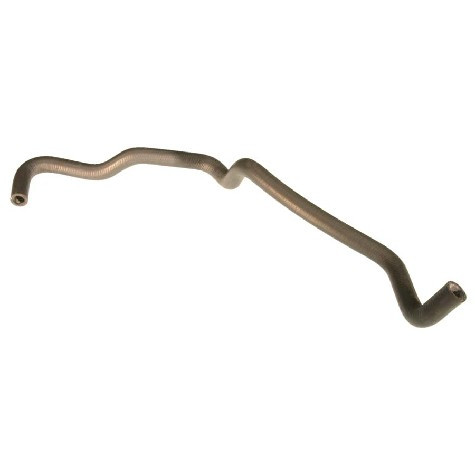
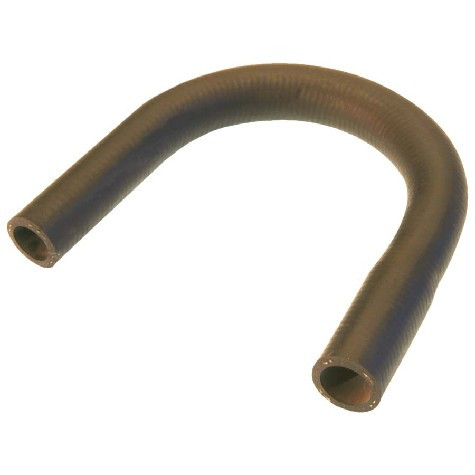
Gates 23133 heater hose for the 2005-2010 Cadillac STS V8 4.6L and other vehicles carries engine coolant from the radiator to the throttle body to the reservoir. This molded hose, also called an HVAC heater hose, has its branch built in.
- Gates Modular Coolant Hose with one integrated branch
- Specifically engineered materials resist collapse under vacuum
- Engineered to resist electrochemical degradation, the leading cause of hose failure
- EPDM tube with synthetic fiber knit reinforcement and a heat-, ozone- and chemical coolant-resistant EPDM cover
- Meets SAE 20R3 EC Class D1 under 25 mm (1 in.) ID and SAE 20R4 EC Class D1 at 25 mm (1 in.) ID and over
- Temperature range: -40°F to +257°F (-40°C to +125°C)
Quick facts
- Part: Gates 23133 heater hose
- Also called: HVAC heater hose
- Fits: 2005-2010 Cadillac STS V8 4.6L and other vehicles
- Position: radiator to throttle body to reservoir
- Material: EPDM, plastic
- Condition: New
Coolant leaks, a soft or collapsed hose, or cracks and swelling in the rubber can mean the hose is worn. A loose clamp, a leaking reservoir or a faulty throttle body connection can show the same signs, so find the cause before buying a new hose.
Fits
It fits the 2005-2010 Cadillac STS V8 4.6L and the 2004-2009 Cadillac SRX V8 4.6L. This listing is one hose, and both take one hose.
Specifications
Fit and size
- Position: radiator to throttle body to reservoir
- Quantity per vehicle: 1
- Centerline length: 60.1 in (1527 mm)
- End 1 inside diameter: 8 mm (0.32 in)
- End 2 inside diameter: 8 mm (0.32 in)
- End 3 inside diameter: 0.24 in
- Branch quantity: 1
Build and materials
- Material: EPDM, plastic
- Construction: molded, modular
- Quick-connect fittings: 0
- Condition: New
- Country of origin: United States
In the box
One heater hose with one branch.
Installation notes
- Replace the clamps each time a new coolant hose is installed.
- For coolant use only, not for fuel or oil transfer.
Interchange: 26547X · 64354 · E91049 · 19129998 · 88956903 · 9794
Product information is for general reference and may contain errors. See our Disclaimer.
This part cross-references / interchanges with the following part numbers:
26547X, 23133, 64354, E91049, 19129998, 88956903, 9794
Frequently Asked Questions
Does the Gates heater hose fit the 2004-2009 Cadillac SRX V8 4.6L?
Yes. Gates 23133 fits the 2004-2009 Cadillac SRX V8 4.6L and the 2005-2010 Cadillac STS V8 4.6L, one hose per car.
Is the Gates molded heater hose a plain length or does it have a branch?
It has one branch built in. The molded hose measures 60.1 in (1527 mm) along its centerline and has no quick-connect fittings.
Does Gates 23133 meet an SAE standard?
Yes. Gates 23133 meets SAE 20R3 EC Class D1 under 25 mm (1 in.) ID and SAE 20R4 EC Class D1 at 25 mm (1 in.) ID and over.
What does a worn heater hose look like when I inspect it?
With the engine off and cool, look for cracks, swelling, or soft or collapsed sections. A shop can pressure test the cooling system.
What is this heater hose made of, and how hot can it get?
This hose is EPDM and plastic, with a synthetic fiber knit reinforcement and an EPDM cover. Its temperature range is -40°F to +257°F (-40°C to +125°C).