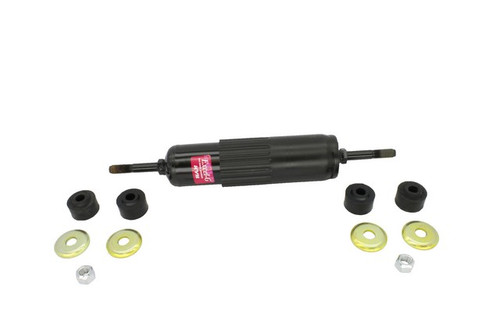
Help restore composed handling to your classic with the KYB shock absorber (P/N 343218), a nitrogen gas-charged Excel-G unit that installs as a direct-fit replacement in the rear position on the 1963-1982 Chevrolet Corvette. This KYB gas shock absorber is built on the same OE assembly lines KYB uses to supply new-vehicle manufacturers, earning the Excel-G its OEA (Original Equipment for the Aftermarket) classification — designed to restore the vehicle's original engineered ride control and handling, not change it.
Nitrogen gas-charged twin-tube design: the Excel-G construction helps manage damping consistently.
Triple lip fluid seal: reduces the chance of oil and gas leaking out.
Vehicle-specific damping valves: hand assembled in-house to correctly manage tire contact, steering response and body movement.
KYB positions the Excel-G as the recommended OEM-style replacement shock and the choice preferred by professional technicians. Signs a rear shock may need replacing include excessive bounce over bumps, nose dive, sway, or fluid leakage — diagnose the cause before ordering. Sold individually; replacing rear shocks as a pair is recommended for balanced ride control.
Interchange: 69622 · 5850
Product information is for general reference and may contain errors. See our Disclaimer.
Frequently Asked Questions
What vehicle does the KYB 343218 shock absorber fit?
It is a direct-fit rear replacement for the 1963-1982 Chevrolet Corvette. Confirm the fit for your specific vehicle using the "Vehicles it fits" section.
Is the KYB 343218 a gas-charged shock?
Yes. The KYB Excel-G is a nitrogen gas-charged, twin-tube design built on KYB's OE assembly lines and classified as OEA (Original Equipment for the Aftermarket).
What position does this shock mount in?
This KYB Excel-G shock absorber is a rear-position unit for the 1963-1982 Chevrolet Corvette.
Do I need to replace both rear shocks?
It is sold individually. Replacing both rear shocks together as a pair is recommended for balanced, even ride control.
How do I know if my rear shock needs replacing?
Signs include excessive bounce over bumps, nose dive, body sway, or fluid leaking from the shock. Diagnose the cause before replacing, as symptoms can have other sources.