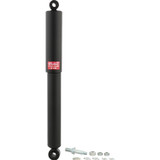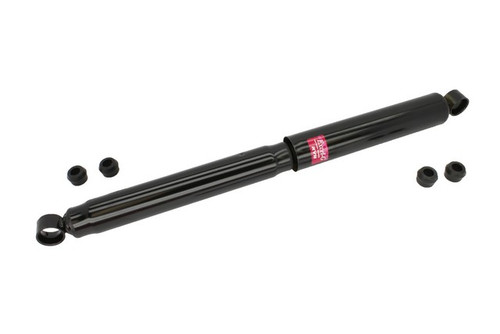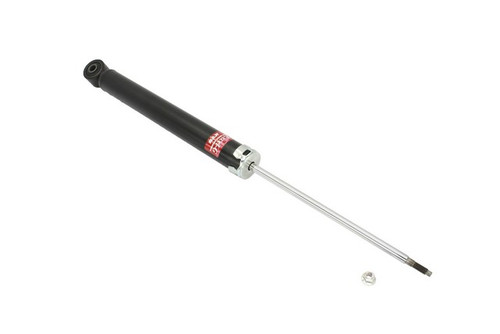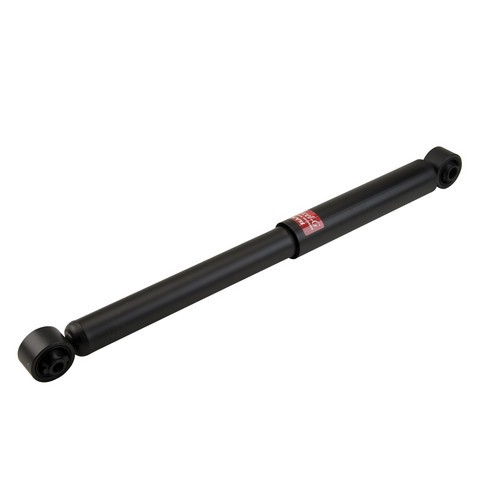
Restore the designed ride control, stability, and handling of your full-size GM truck with the KYB Excel-G Suspension Shock Absorber 344366, a nitrogen gas-charged, twin-tube gas shock that installs in the rear position. It fits a wide range of Chevrolet and GMC trucks and vans, including the 1975-1986 Chevrolet C20 and C30, 1993-1996 Chevrolet G30, 1975-1999 Chevrolet P30, 1979-1986 GMC C2500 and C3500, and 1979-1999 GMC P3500 — see the Buyer's Guide tab for the full list of 29 applications and engine details.
- OEA — Original Equipment for the Aftermarket: built on the same KYB OE assembly lines with the same OE-quality components, calibrated to restore original designed performance rather than change it.
- Nitrogen gas-charged twin-tube design: includes every quality component found in KYB's global OEM products and is a preferred choice among professional technicians.
- Triple-lip fluid seal: reduces the chance of oil and gas leaking out.
- Vehicle-specific, hand-assembled damping valves: manage tire contact, steering response, and body movement; thick strut bodies and brackets help minimize flex to maintain correct alignment.
As a KYB recommended OEM replacement shock, the Excel-G also helps keep electronic safety systems performing as the manufacturer intended.
Interchange: G63366 · 34960
This part cross-references / interchanges with the following part numbers:
Frequently Asked Questions
Where does this shock install?
The KYB Excel-G 344366 installs in the rear position on the listed Chevrolet and GMC trucks and vans. Confirm the application for your vehicle in the Buyer's Guide tab.
What type of shock is this?
It is a nitrogen gas-charged, twin-tube gas shock (KYB Excel-G) built on KYB's OE assembly lines with OE-quality components to restore the vehicle's original designed performance.
What does the Excel-G aim to restore?
KYB designed the Excel-G to restore a vehicle's original ride control, stability, stopping, lane-change responsiveness, and handling, rather than to change the factory tuning.
What are signs this shock may need replacing?
Excessive bouncing, poor body control, reduced stability, or oil leakage from the shock can indicate wear. Diagnose the cause before replacing, and inspect related suspension parts.
Should I replace shocks in pairs?
This listing is for one shock. Replacing both sides on the same axle together is recommended for balanced, even ride control. Order the quantity your vehicle requires.