
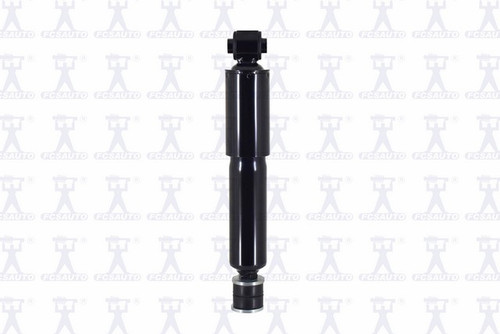

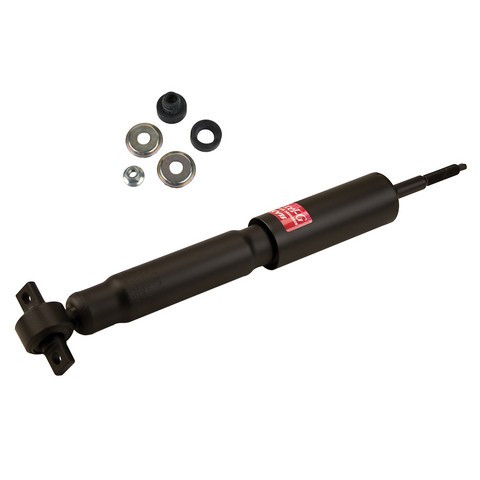

KYB Suspension Shock Absorber P/N:344367
$70.99
Bring your truck's front suspension back to factory spec with the KYB Excel-G shock absorber 344367 — a nitrogen gas-charged, twin-tube front gas shock built to restore original ride control, stability and handling. This KYB shock absorber is a direct-fit replacement for the 1997-2002 Ford Expedition, 1997-2003 Ford F-150, 2004 Ford F-150 Heritage, 1997-1999 Ford F-250, and 1998-2002 Lincoln Navigator; see the Buyer's Guide tab for engine-level fitment.
- Excel-G / OEA design: nitrogen gas-charged, twin-tube unit made on KYB's OE assembly lines with the same OE-quality components, calibrated to restore original designed performance — earning the OEA (Original Equipment for the Aftermarket) classification.
- Triple-lip fluid seal: reduces the chance of oil and gas leaking out.
- Strong, thick bodies and brackets: minimize flex to help maintain correct alignment in all conditions.
- Vehicle-specific damping: hand-assembled valves manage tire contact, steering response and body movement.
Because electronic safety systems depend on the suspension working as intended, this KYB gas shock absorber helps keep those systems performing as designed. Sold individually; replacing both front shocks as a pair is recommended for balanced handling.
Interchange: 2L3Z18124MA · F65Z18124EB · F65Z18124FB · G63714 · 37131
This part cross-references / interchanges with the following part numbers:
2L3Z18124MA, F65Z18124EB, F65Z18124FB, G63714, 37131
Frequently Asked Questions
What vehicles does the KYB 344367 shock absorber fit?
It is a direct-fit front replacement for the 1997-2002 Ford Expedition, 1997-2003 Ford F-150, 2004 Ford F-150 Heritage, 1997-1999 Ford F-250, and 1998-2002 Lincoln Navigator. Check the Buyer's Guide tab to confirm your engine.
Is this a gas shock absorber?
Yes. The KYB Excel-G is a nitrogen gas-charged, twin-tube gas shock absorber calibrated to restore the vehicle's original designed damping performance.
Is the KYB Excel G shock absorber an OEM replacement?
KYB lists it as a recommended OEM replacement shock and classifies it OEA (Original Equipment for the Aftermarket), built on the same OE assembly lines with OE-quality components.
Do I need to replace both front shocks?
This listing is for one shock, sold individually. Replacing both front shocks as a matched pair is recommended for even, balanced handling.
What does the triple-lip seal do?
The triple-lip fluid seal reduces the chance of oil and gas leaking out of the shock, helping it maintain consistent damping over time.
Write a Review
KYB
KYB Suspension Shock Absorber P/N:344367
Related Products