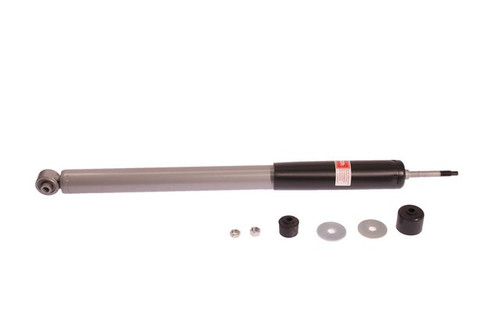
KYB Suspension Shock Absorber P/N:349035
KYB 565005 rear shock absorber for the 1997-2002 Ford Expedition and other vehicles damps rear suspension movement as a high pressure monotube gas shock. Its damping performance is up to 40% higher than standard shock absorbers.
Oily wetness on the shock body, a torn boot or a bouncy rear ride can mean a rear shock is wearing out. Before you replace it, look at the body with the vehicle parked and the engine off, since a worn bushing or spring can give a similar bounce. Both rear shocks are normally replaced together, and this listing is one shock; the vehicle takes one on each side of the rear axle.
This shock fits the 1997-2002 Ford Expedition and the 1998-2002 Lincoln Navigator.
Fit and size
Build and materials
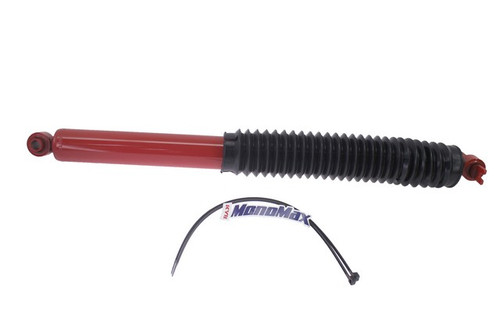
One rear shock absorber with its rubber off-road dust boot.
Interchange: F75Z18125AC · 77717
This part cross-references / interchanges with the following part numbers:
Do these Ford Expedition shock absorbers fit a 1997-2002 model?
Yes. KYB 565005 is a rear shock for the 1997-2002 Ford Expedition, and it also fits the 1998-2002 Lincoln Navigator. The vehicle takes two, one on each side of the rear axle.
Is this KYB gas shock absorber a monotube design?
Yes. KYB 565005 is a high pressure monotube gas shock with a large bore and a zinc-coated piston ring.
Does this KYB rear shock absorber include a dust boot?
Yes. This rear shock comes with a rubber off-road dust boot that protects the shaft and keeps dirt and debris away from the seals.
How can I tell if a rear shock is worn out?
Oily wetness on the shock body, a torn boot or a bouncy ride can mean the shock is wearing out. A shop can test it if you are unsure.
Is this KYB shock absorber meant for towing and hauling?
Yes. It is a KYB MonoMax, a heavy duty monotube shock made just for trucks, with a reputation for towing a trailer, hauling heavy loads and off-road work.
No reviews yet — be the first to review this product.
Write a ReviewWARNING: These products can expose you to chemicals including lead and phthalates, which are known to the State of California to cause cancer and birth defects or other reproductive harm. For more information go to www.P65Warnings.ca.gov.