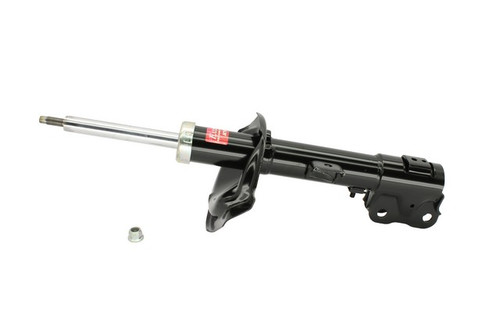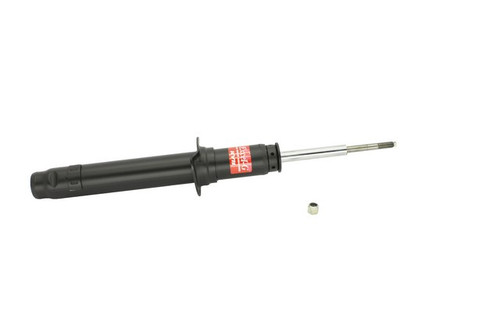
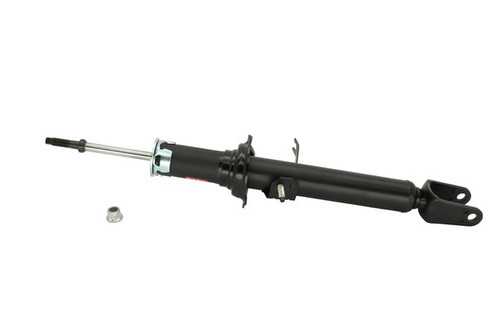
Restore the designed control and handling of your Hyundai with the KYB Suspension Strut 340024, a nitrogen gas-charged, twin-tube Excel-G unit built to bring back your vehicle's original ride and stability. It fits the front position on the 2008-2011 Hyundai Azera and the 2009-2010 Hyundai Sonata (see the Buyer's Guide tab for engine-level fitment). KYB's Excel-G line is classified OEA (Original Equipment for the Aftermarket) and is made on the same KYB OE assembly lines using OE-quality components, calibrated to restore original designed performance rather than change it.
- Nitrogen gas-charged twin-tube design: includes the quality components KYB's global OEM products use, and is a preferred choice among professional technicians.
- Triple-lip fluid seal: helps reduce the chance of oil and gas leaking out.
- Vehicle-specific damping valves: hand assembled in-house to manage tire contact, steering response and body movement.
- Strong, thick strut body and brackets: among the industry's stoutest, minimizing flex to help maintain correct alignment in varied conditions.
By keeping the suspension, brakes and tires operating as the manufacturer intended, the Excel-G also helps electronic safety systems perform as designed.
Interchange: 70013 · 546113K650 · 546113K680 · 72281
This part cross-references / interchanges with the following part numbers:
Frequently Asked Questions
What vehicles does the KYB 340024 strut fit?
It fits the front position on the 2008-2011 Hyundai Azera and the 2009-2010 Hyundai Sonata. Check the Buyer's Guide tab for engine-level details.
What position does this strut install in?
This is a front suspension strut for the listed Hyundai applications.
What type of strut is the Excel-G 340024?
It's a nitrogen gas-charged, twin-tube design that uses the same OE-quality components found in KYB's global OEM products.
What does the triple-lip seal do?
The triple-lip fluid seal helps reduce the chance of oil and gas leaking out of the strut.
Should I replace struts in pairs?
Struts are sold individually. Replacing both sides on the same axle together is recommended for balanced, even handling.