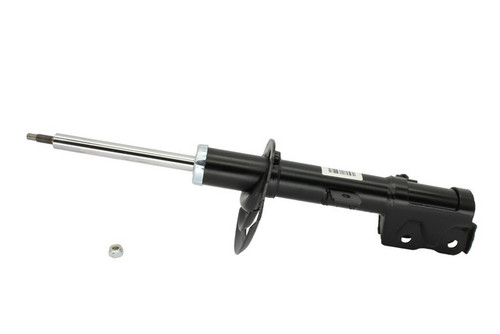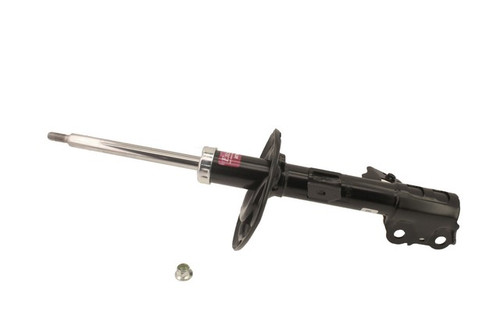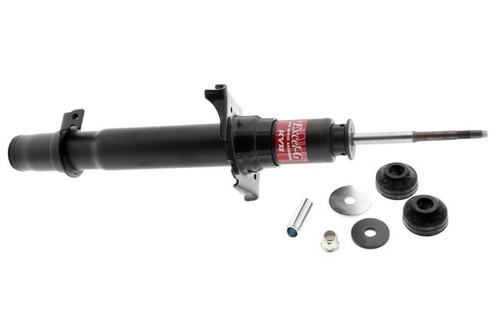
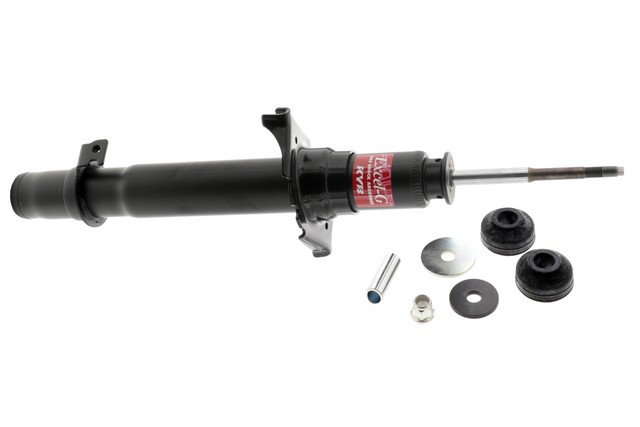
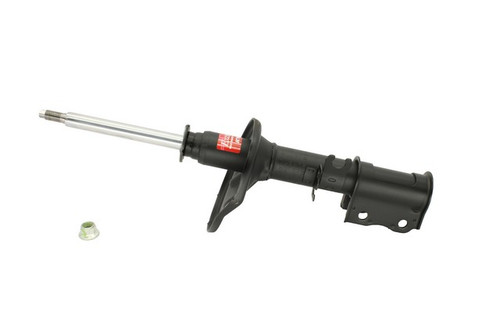
Keep steering response, stability, and body control in check with the KYB Excel-G Suspension Strut 3410062, a nitrogen gas-charged, twin-tube damper built on the same OE assembly lines KYB supplies to new-vehicle manufacturers. It installs as a direct-fit replacement in the front right position on the 2013-2015 Honda Crosstour, and is designed to restore the ride control and handling KYB engineered for that vehicle rather than change it.
- Twin-tube, gas-charged design: nitrogen gas-charged construction earning KYB's OEA (Original Equipment for the Aftermarket) classification.
- Strong strut body and brackets: thick body and brackets help minimize flex to maintain correct alignment.
- Triple-lip fluid seal: reduces the chance of oil and gas leaking out.
- Anti-rollover spring: an internal anti-rollover spring may make the extended length appear shorter.
Vehicle-specific, hand-assembled damping valves manage tire contact, steering response, and body movement, helping electronic safety systems perform as designed. If a worn or leaking front right strut is behind poor handling or excessive body movement, this Excel-G replaces it.
Interchange: 51611TP6A04 · 51611TP7A06 · 73083
This part cross-references / interchanges with the following part numbers:
Frequently Asked Questions
What vehicle does this strut fit?
It's a direct-fit replacement for the 2013-2015 Honda Crosstour. See the Buyer's Guide tab to confirm the exact engine and trim for your vehicle.
What position does this strut mount in?
This KYB Excel-G strut (MPN 3410062) is cataloged for the front right position.
What type of strut is this?
It's a nitrogen gas-charged, twin-tube design carrying KYB's OEA (Original Equipment for the Aftermarket) classification, built on the same OE assembly lines KYB supplies to automakers.
Should I replace struts in pairs?
This listing is for one strut. Replacing both sides on the same axle together is recommended for balanced, even handling, though it isn't strictly required.
What are signs this strut may need replacing?
Poor handling, reduced stability during lane changes, excessive body movement, or fluid leaking from the strut can indicate a worn unit. Diagnose the cause before replacing.