



Part number:
210106
UPC:
048598274090
Condition:
New
Weight:
3.60 LBS
Item Package Quantity:
1

Monroe Shocks & Struts Suspension Shock Absorber P/N:210106
$26.99
Help your car stay planted over rough pavement with the Monroe shock absorber 210106 from the Restore line. This rear unit is a direct-fit replacement for many vehicles, among them the 2006-2011 Chevrolet HHR, 2005-2010 Chevrolet Cobalt and 2007-2010 Pontiac G5. See the "Vehicles it fits" section for the full list and engine details.
Monroe Restore shocks are built for consistent performance. They are designed to deliver a high level of handling and control while filtering out noise, vibration and harshness.
- Nitrogen gas charge: helps keep the tires in contact with the road by reducing aeration and shock fade, for improved ride and handling.
- Banded piston: helps cut friction between the piston and pressure tube, so the shock responds better to changing road surfaces and operates smoothly.
- Validated design: designed and validated for consistent performance.
- Broad coverage: the Restore line spans domestic and import passenger cars, light trucks and SUVs.
As a rear suspension shock absorber, it dampens spring movement at the back of the vehicle. Signs a shock may need replacing include excessive bouncing after bumps, fluid leaking from the shock body, knocking noises and uneven tire wear. Replacing both rear shocks together is recommended for balanced handling.
Interchange: 530456 · 560569 · 10368516 · 15780243 · 22696400 · 25793745 · TS3230012B · 342546 · 69587 · 343308 · 349043 · GM116 · 33183 · 55779 · 5779 · SH69587 · 94330 · NS5779 · 173887 · 12130299 · 785779 · 251030
This part cross-references / interchanges with the following part numbers:
530456, 560569, 10368516, 15780243, 22696400, 25793745, TS3230012B, 342546, 69587, 343308, 349043, GM116, 33183, 55779, 5779, SH69587, 94330, NS5779, 173887, 12130299, 785779, 251030
Frequently Asked Questions
Which vehicles does the Monroe 210106 fit?
It fits many vehicles, among them the 2006-2011 Chevrolet HHR, 2005-2010 Chevrolet Cobalt and 2007-2010 Pontiac G5. See the "Vehicles it fits" section for the full list and engine details.
Is the 210106 a Monroe rear shock absorber?
Yes. The Monroe Restore 210106 is cataloged for the rear position on the listed applications.
What does the nitrogen gas charge do?
It helps maintain tire-to-road contact by reducing aeration and shock fade, for improved ride and handling.
What are signs my rear shocks may need replacing?
Common signs include excessive bouncing after bumps, fluid leaking from the shock body, knocking noises and uneven tire wear. Have the suspension inspected to confirm the cause before replacing.
Should I replace both rear shocks at once?
Replacing both rear shocks together is recommended so the two sides dampen evenly for balanced handling.
Reviews
No reviews yet — be the first to review this product.
Write a ReviewWrite a Review
Monroe
Monroe Shocks & Struts Suspension Shock Absorber P/N:210106
Related Products

Monroe Shocks & Struts Suspension Shock Absorber P/N:32315
Monroe Shocks & Struts 32315 rear shock absorber for the 1995-2002 Kia Sportage damps rear suspension movement to control ride and handling. Designed and validated to meet OE spec, it is a passive...
$33.99
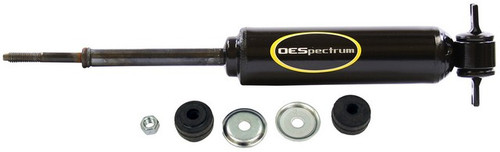
Monroe Shocks & Struts Suspension Shock Absorber P/N:37093
Monroe OESpectrum 37093 Front Suspension Shock Absorber for Dodge D150
$43.99

Monroe Shocks & Struts Suspension Shock Absorber P/N:34905
Damp harsh road impacts and keep the rear suspension under control with the Monroe Gas-Magnum Rear Suspension Shock Absorber 34905. This nitrogen gas-charged shock is a direct-fit replacement for...
$52.99

Monroe Shocks & Struts Suspension Shock Absorber P/N:37120
Help smooth the ride and keep body motion in check with the Monroe OESpectrum Front Suspension Shock Absorber 37120, a direct-fit front damper for the 1987-1995 Jeep Wrangler. This OESpectrum...
$58.99