
Monroe Shocks & Struts Suspension Shock Absorber P/N:37272
Monroe OESpectrum 37272 Rear Suspension Shock Absorber
$67.99

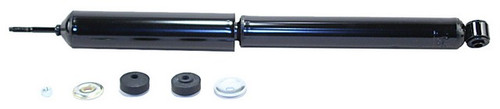

Settle the ride and keep the rear tires planted with the Monroe OESpectrum Rear Suspension Shock Absorber 5861, a nitrogen gas-charged damper designed to help restore a vehicle's original factory drivability and control. It drops in as a direct-fit rear application for many vehicles, among them the 1987-1988 Ford Cougar, 1980-1988 Ford Thunderbird and 1984-1992 Lincoln Mark VII — see the Buyer's Guide tab for the full list and engine-level details.
Full displaced valving and a larger bore provide efficient damping control for a smooth, consistent ride. A self-lubricating fluid seal retains gas and reduces friction against the piston rod. If worn rear shocks are behind excessive bounce or poor body control, this replaces them. Sold individually; replace both rear shocks together as a matched pair for balanced handling.
Interchange: TS3233502B · 5U2Z18V125VE · E3SZ18125C · E8SZ18125A · 69709 · 343162 · KG5556 · E7LY18125A · E8LY18125A · E8LY18125B · F7AZ18125FA · SH81461 · 12140686 · 12536000
This part cross-references / interchanges with the following part numbers:
What vehicles does the Monroe 5861 fit?
It's a rear shock application for many vehicles, among them the 1987-1988 Ford Cougar, 1980-1988 Ford Thunderbird and 1984-1992 Lincoln Mark VII. See the Buyer's Guide tab for the full list.
Is this a front or rear shock absorber?
It is a rear suspension shock absorber, as listed by Monroe's OESpectrum catalog for the covered applications.
How many do I need?
It's sold individually. We recommend replacing both rear shocks together as a matched pair for even, balanced handling.
What does the nitrogen gas charge do?
The nitrogen gas charge helps maintain tire-to-road contact by reducing aeration and shock fade, which supports improved ride and handling.
What are signs my rear shocks may need replacing?
Excessive bouncing after bumps, poor body control, or reduced handling stability can indicate worn shocks. Diagnose the cause before replacing, since other parts can share these symptoms.



WARNING: These products can expose you to chemicals including lead and phthalates, which are known to the State of California to cause cancer and birth defects or other reproductive harm. For more information go to www.P65Warnings.ca.gov.
