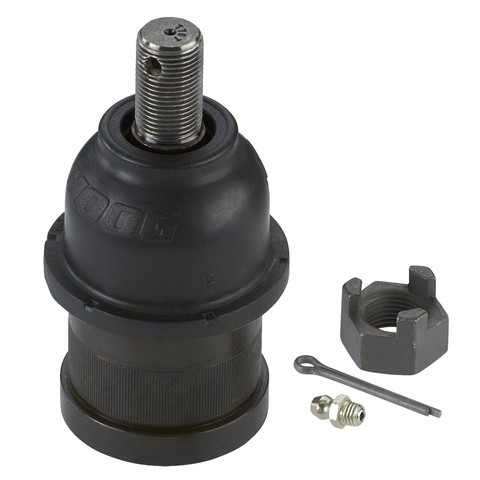
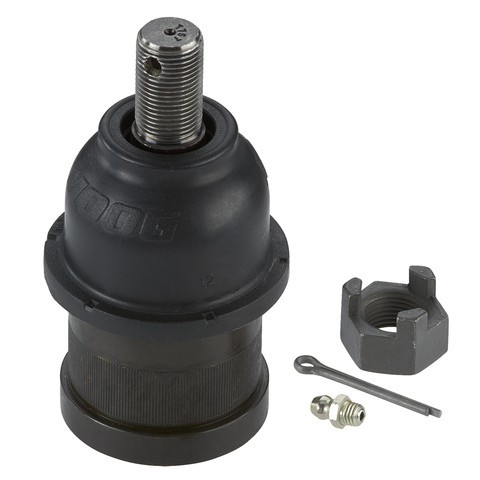
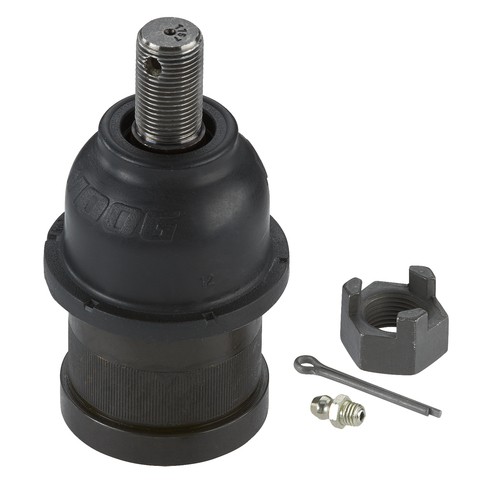
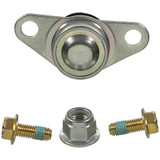
Help restore steady steering and handling with the MOOG CHASSIS ball joint K7025, a front lower unit from the QuickSteer line that serves as the pivot between the lower control arm and the steering knuckle. It fits many vehicles, among them the 1987-1996 Dodge Dakota, 1974-1977 Chrysler Town & Country and 1984-1989 Dodge D100, as a direct-fit replacement for the listed applications. See the Buyer's Guide tab for the full list and engine details.
QuickSteer chassis parts are designed and tested to help return steering and handling to their original performance. MOOG designed this suspension ball joint for OE fit and function, and it is coated for corrosion resistance.
- Problem Solver Gusher bearing: a metal-to-metal design adds strength and lets grease flow through the bearing surface. This is intended to reduce friction and extend service life.
- Heat-treated ball studs: the studs are treated to match or exceed OE requirements. This helps inhibit premature failure and improve fatigue strength.
- Greaseable socket: you can add new lubricant to flush out contaminants, which helps reduce corrosion and wear.
- Pressed-in cover plate: the patented plate seals out debris and minimizes looseness, which reduces bearing wear.
- Precision tolerances: these are intended to make installation and steering alignment easier.
A worn 1987-1996 Dodge Dakota lower ball joint, or one on any listed application, may show itself as clunking over bumps, loose or wandering steering, or uneven tire wear. If a worn front lower ball joint is the cause, replacing it with K7025 is designed to help restore handling.