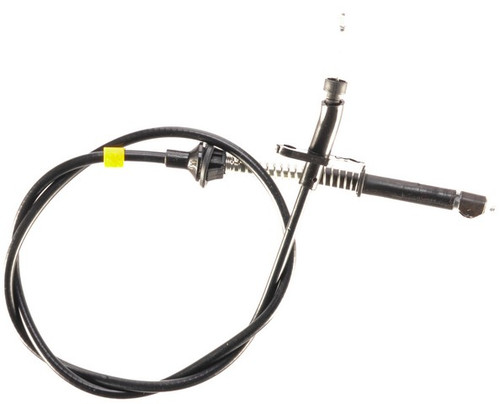
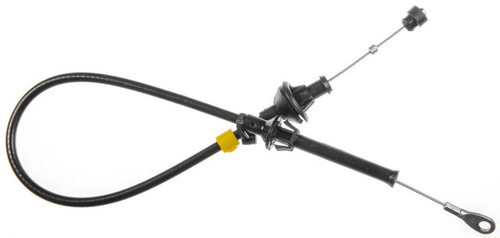
Keep the gas pedal talking to the carburetor with the Pioneer Automotive Industries Carburetor Accelerator Cable CA-8682. This throttle cable transmits pedal movement to the carburetor's throttle linkage, and it installs as a direct-fit replacement for the listed applications: the 1988-1996 Ford F-250, 1988-1997 Ford F-350, 1989 Ford E-350 Econoline, 1989 Ford E-350 Econoline Club Wagon, 1990-1991 Ford Bronco, 1990-1991 Ford F-150, and 1997 Ford F-250 HD (all engines).
- Durable steel inner cable: the load-carrying core that moves the throttle.
- Polymer outer housing: helps protect the cable from corrosion and abrasion.
- Manufactured to OE specs: a quality replacement alternative to the original cable.
- Common hardware where applicable: may include brackets, grommets, and ends depending on the application.
The accelerator cable links the throttle pedal to the carburetor throttle. Over time a cable can fray, stretch, bind, or stick — signs it may need replacing include a stiff or sticky pedal, delayed throttle response, or a throttle that doesn't return smoothly. If a worn or frayed cable is the cause, this replaces it.
Interchange: Manufacturer part number CA-8682 (also CA8682). Country of origin: Colombia.
This part cross-references / interchanges with the following part numbers:
61353, CE546, 16628, 16650, E8TZ9A758F, E9TZ9A758K, E9TZ9A758L, E9TZ9A758M, E9TZ9A758P, F0TZ9A758F, 6101498, CB248