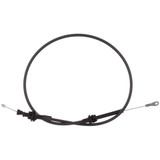
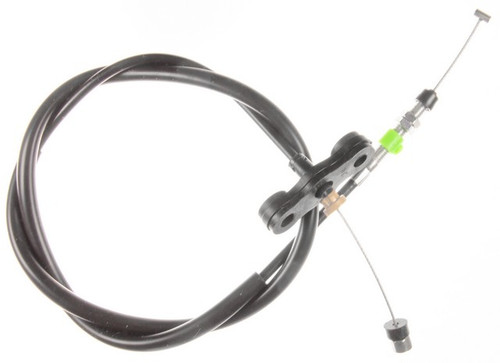
Reconnect your accelerator pedal to the carburetor with the Pioneer Automotive Industries Carburetor Accelerator Cable, part number CA-8812. It is a direct-fit replacement for the listed applications, the 1984-1985 Honda Accord. See the Buyer's Guide tab for engine details.
An accelerator cable carries pedal movement to the carburetor's throttle linkage. The throttle opens as you press the pedal and closes as you release it.
- Built to OE specs: Manufactured to OE specs as a high-quality replacement alternative.
- Steel inner cable: A durable steel inner cable transmits pedal movement to the throttle.
- Polymer outer housing: Shields the inner cable from corrosion and abrasion.
Signs this part may need replacing: A pedal that feels stiff or sticky, a throttle that is slow to return to idle, a frayed or kinked cable, or a cracked or damaged outer housing. A throttle that sticks is a safety concern, so diagnose the cause promptly. If a worn accelerator cable is the cause, CA-8812 is designed to replace it. Inspect the throttle linkage at the same time.
Interchange: 61810 · 950457 · CE225 · 17910SA5671 · CB185
This part cross-references / interchanges with the following part numbers:
61810, 950457, CE225, 17910SA5671, CB185