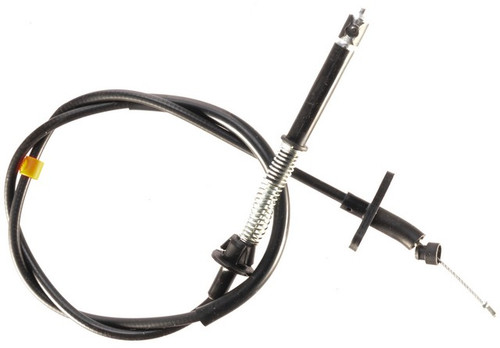
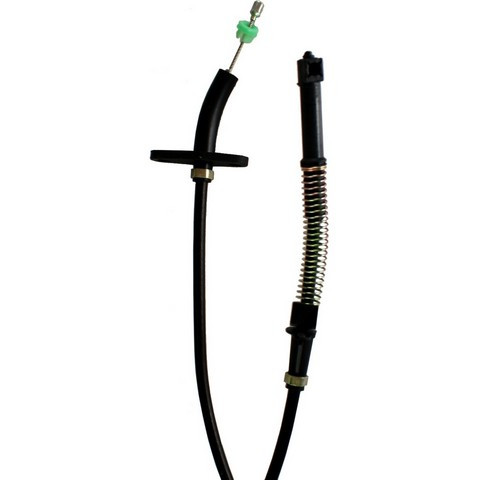
Keep pedal input reaching the throttle with the Pioneer Accelerator Cable CA-9028. It is a direct-fit replacement for the 1989-1998 Ford F-250, 1990-1998 Ford F-150, 1992-1997 Ford F-350, 1997 Ford F-250 HD and 1997 Ford Lobo. See the Buyer's Guide tab for engine-specific details.
Pioneer offers its cables as a high-quality replacement alternative, built to OE specs. The accelerator cable carries pedal movement to the throttle linkage. A worn, frayed or binding cable can affect how the engine responds when you press or release the pedal.
- Built to OE specs: manufactured to original-equipment specifications.
- Steel inner cable: a durable steel core transmits pedal input to the throttle.
- Polymer outer housing: helps protect the inner cable from corrosion and abrasion.
- Hardware where applicable: Pioneer cables often include common brackets, grommets and ends when the application calls for them.
Signs this part may need replacing: a pedal that sticks, binds or returns slowly; excess slack or a delayed throttle response; a frayed, kinked or broken cable; or a cracked outer housing. Diagnose the cause first. If the cable is at fault, CA-9028 replaces it.
Interchange: F1TZ9A758J · F4TZ9A758L