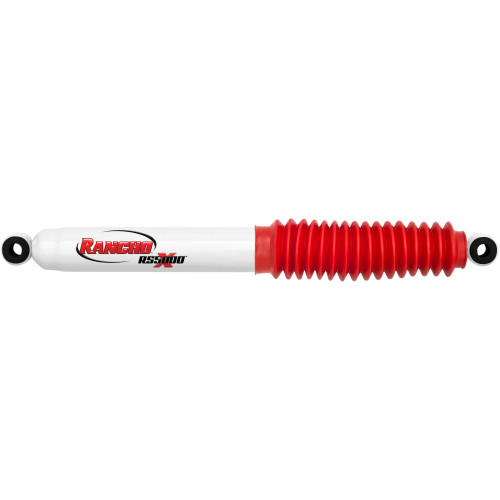
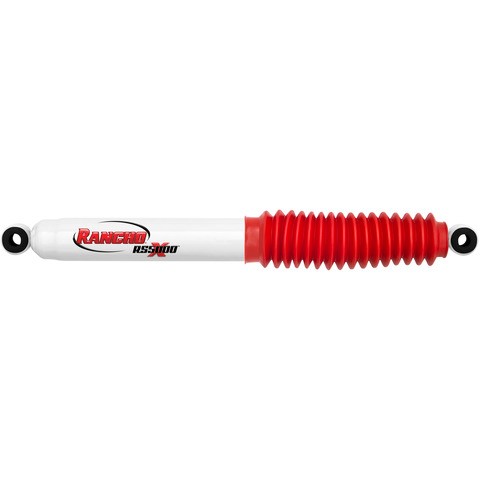
Smooth out the ride and sharpen control on and off the pavement with the Rancho RS5000X Suspension Shock Absorber RS55113. Built with Rancho's exclusive Cross Tuned technology, this twin-tube shock is engineered as a direct-fit replacement across a huge range of trucks, vans, and SUVs — including the 1969-1972 and 1987-1991 Chevrolet Blazer, 1975-1995 Chevrolet G10 and G20, 1966-1979 Ford Bronco, 1976-1986 Jeep CJ7, and many more. This listing may cover the FRONT, REAR, or FRONT INNER position depending on the application. See the Buyer's Guide tab for the full list of vehicles and the correct position.
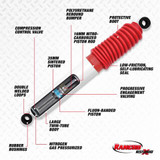
- Cross Tuned technology: an exclusive rebound valving system and advanced compression phase help improve overall handling and performance on and off road.
- Progressive Engagement Valving: custom-tuned for each vehicle to help reduce initial impacts at low speeds and minimize a rough ride.
- Strong and durable build: 16mm nitro-carburized piston rod to resist scuffs and corrosion, double-welded loops at stress areas, a 35mm sintered iron piston, and a polyvinyl protective boot.
- Temperature-tough: a large twin-tube body filled with all-weather fluid runs cooler and is designed to withstand internal temperatures of -40 to 248°F.
Nitrogen gas pressurized to 150 PSI helps minimize air-to-oil mixing to reduce damping fade and foaming, and it's backed by Rancho's Limited Lifetime Warranty.
Interchange: 813030 · 919500B · RS5113
This part cross-references / interchanges with the following part numbers:
Frequently Asked Questions
What does this shock absorber do?
It dampens spring movement to help control body motion and absorb road impacts. Rancho's Cross Tuned valving is designed to improve handling and ride quality on and off road.
Which position does the RS55113 fit?
Depending on the application, this listing may serve the FRONT, REAR, or FRONT INNER position. Check the Buyer's Guide tab to confirm the correct position for your vehicle.
What are signs my shock may need replacing?
Common signs include excessive bouncing, a rough or bottoming-out ride, nose dive when braking, uneven tire wear, or visible fluid leakage from the shock body.
How is this shock built to last?
It features a 16mm nitro-carburized piston rod, double-welded loops at stress areas, a 35mm sintered iron piston, and a polyvinyl protective boot, plus a low-friction self-lubricating seal.
Should I replace shocks in pairs?
Replacing shocks as a matched set on the same axle is a best practice for balanced, even ride control. This listing is for the individual shock shown.
Write a Review