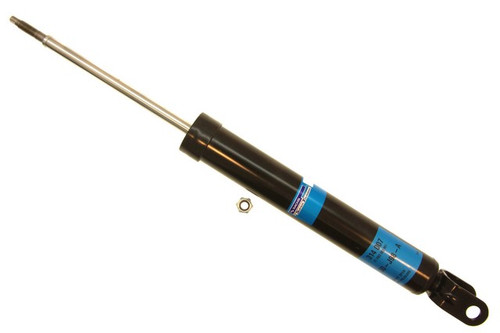
Sachs Suspension Shock Absorber P/N:314 007
Sachs Suspension Shock Absorber P/N:314 007. Fits: Hyundai Elantra.
$93.99



Help keep the rear of your crossover settled over bumps with this SACHS shock absorber, part number 314722. It is cataloged for the rear suspension of the 2010-2017 Volvo XC60 as a direct-fit replacement for the listed application. See the Buyer's Guide tab for engine and trim details.
SACHS engineers its shocks and struts to help restore original handling dynamics, and designs them to meet the highest safety, comfort, performance, and quality standards.
As a suspension shock absorber, this unit dampens the up-and-down motion of the springs, which helps keep the tires in contact with the road. Signs that a rear shock may need replacing include excessive bouncing after bumps, rear squat under acceleration, fluid seeping from the body, and uneven or cupped tire wear. Shocks are commonly replaced in pairs on the same axle for balanced handling.
Is this the right shock absorber for a 2010-2017 Volvo XC60?
It is listed for the 2010-2017 Volvo XC60 in the rear position. Check the Buyer's Guide tab for engine and trim details before ordering.
Is this SACHS shock absorber rear-mounted?
Yes. The catalog lists part number 314722 for the rear position on the 2010-2017 Volvo XC60.
What does application-tuned valving mean?
SACHS tunes the shock's valving to the specific application. The tuning is designed to balance longevity with comfort and control.
What are signs my rear shocks may need replacing?
Common signs are excessive bouncing, rear squat under acceleration, fluid on the shock body, and uneven tire wear. Diagnose the cause before replacing parts.
Should I replace rear shocks in pairs?
Replacing both rear shocks together is recommended. Matched damping on each side helps keep handling balanced.


WARNING: These products can expose you to chemicals including lead and phthalates, which are known to the State of California to cause cancer and birth defects or other reproductive harm. For more information go to www.P65Warnings.ca.gov.
