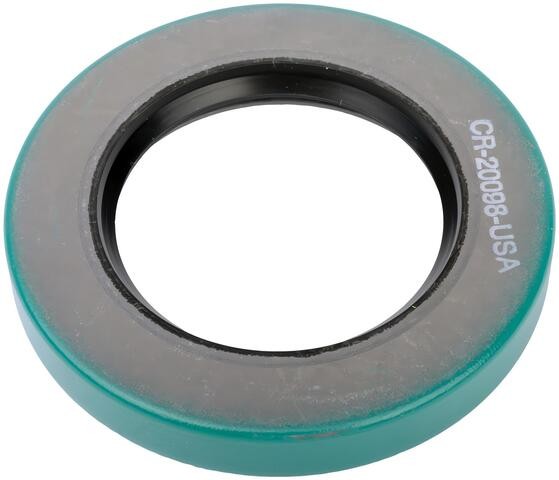
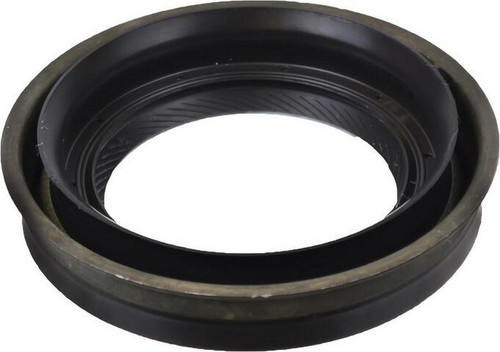
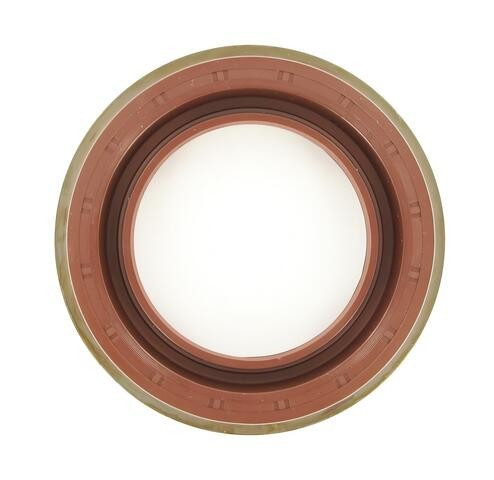
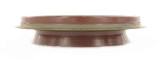
Keep lubricant inside the axle and road grime out with the SKF differential pinion seal, part number 20098. It serves as a direct-fit replacement on the rear differential for the listed classic International applications, including the 1957 International S100, 1957-1958 International A110, 1959-1960 International B100, 1961-1962 International C100, 1963-1964 International C1000, 1964 International C900 and 1965 International D1000. See the "Vehicles it fits" section for the full list of models and engine details.
A pinion seal sits in the nose of the differential housing where the driveshaft connects. The seal body stays stationary while its lip rides against the rotating pinion yoke or flange, holding differential lubricant in and keeping contaminants out.
- Dirt and water protection: designed to provide superior protection against dirt and water.
- Rigid metal case: the body is formed from deep drawn sheet steel for a rigid, stress-resistant case.
- Steel-wire garter spring: the garter spring uses cold drawn steel wire for superior fluid retention.
- Tested for correct fit: produced with a high-quality, tested design and materials intended to fit correctly.
SKF invented the first integrated shaft seal in 1928 and has continued to pioneer new designs and bonding techniques since then. Each seal is made to a specific design with premium materials chosen for its application and operating environment.
Signs this part may need replacing: differential lubricant seeping or dripping around the pinion yoke or flange, a wet, oily film on the front of the differential housing, or a dropping fluid level. Diagnose the source of any leak before replacing the seal.
Interchange: CHR 20098
CHR20098 · 2A3688 · 598452 · 5008054 · 831900M1 · 5183965 · 712397 · 29058 · XAH90962 · 145820098 · 105267R91 · 23745H · 27346HA · 27346HB · 190492
This part cross-references / interchanges with the following part numbers:
2A3688, 598452, 5008054, 831900M1, CHR 20098, 5183965, 712397, 29058, XAH90962, 145820098, 105267R91, 23745H, 27346HA, 27346HB, 190492
Frequently Asked Questions
Where does the SKF 20098 seal install?
It is cataloged for the rear differential pinion on the listed International applications, sealing the opening where the driveshaft connects to the differential housing.
Which International models does this seal fit?
Listed applications include the 1957-1958 International A110, 1959-1960 International B110, 1961-1962 International C110 and 1965 International D1100. See the "Vehicles it fits" section for the full list.
How is the SKF 20098 constructed?
The body is a deep drawn sheet steel case for rigidity and stress resistance, and the garter spring uses cold drawn steel wire for fluid retention.
What are signs of a failing pinion seal?
Common signs include lubricant leaking around the pinion yoke or flange, an oily differential nose, and a low fluid level. Confirm the leak source before replacing the seal.
Does the pinion seal rotate with the pinion?
No. The seal body stays stationary in the differential housing while its lip contacts the rotating pinion yoke or flange to hold lubricant in.