


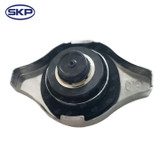
Keep your cooling system sealed and holding pressure with the SKP Radiator Cap, part number SK10231. It fits many vehicles, among them the 1994-1998 Dodge Ram 1500 3.9L / 5.2L / 5.9L, 1988-1999 Chevrolet C1500 4.3L / 5.0L / 5.7L / 6.2L / 7.4L and 1988-1999 Chevrolet K1500 4.3L / 5.0L / 5.7L / 6.2L, and is a direct-fit replacement for the listed applications. See the "Vehicles it fits" section for the full list of vehicles and engines.
A radiator cap closes off the radiator filler neck and is designed to help the cooling system hold pressure, which raises the boiling point of the coolant. If a worn cap is the cause of coolant loss or overheating, this replacement addresses it.
Signs a radiator cap may need replacing: coolant loss with no visible leak, overheating, coolant pushing out of the overflow reservoir, or a damaged seal on the old cap. These symptoms can have other causes, so diagnose the cooling system before replacing parts.
Installation note: never remove a radiator cap from a hot engine. Let the system cool fully first.
Interchange: T16V · 10283897 · 10409635
Product information is for general reference and may contain errors. See our Disclaimer.
This part cross-references / interchanges with the following part numbers:
Is the SKP SK10231 the right radiator cap for a 1994-1998 Dodge Ram 1500 3.9L / 5.2L / 5.9L?
It is listed for the 1994-1998 Dodge Ram 1500 3.9L / 5.2L / 5.9L. Check the "Vehicles it fits" section for your year and engine before ordering.
Does it fit the 1988-1999 Chevrolet C1500 4.3L / 5.0L / 5.7L / 6.2L / 7.4L and 1988-1999 Chevrolet K1500 4.3L / 5.0L / 5.7L / 6.2L?
Yes, it is listed for both trucks with those engines. The "Vehicles it fits" section shows the years covered for each engine.
What does a radiator cap do?
It seals the radiator filler neck and is designed to help the cooling system hold pressure, which raises the boiling point of the coolant.
What are signs my radiator cap may need replacing?
Signs include coolant loss with no visible leak, overheating, or coolant pushing out of the overflow reservoir. Other parts can cause the same signs, so diagnose the cause first.
How many caps do I need, and how do I install it?
The listed applications use one cap. Let the engine cool completely, then remove the old cap and turn the new one onto the filler neck until it seats.
No reviews yet — be the first to review this product.
Write a Review



WARNING: These products can expose you to chemicals including lead and phthalates, which are known to the State of California to cause cancer and birth defects or other reproductive harm. For more information go to www.P65Warnings.ca.gov.
