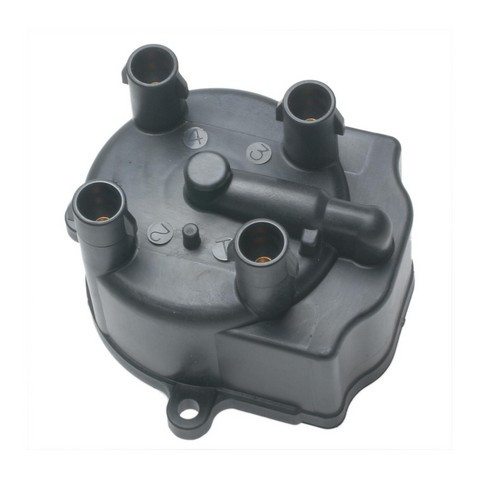
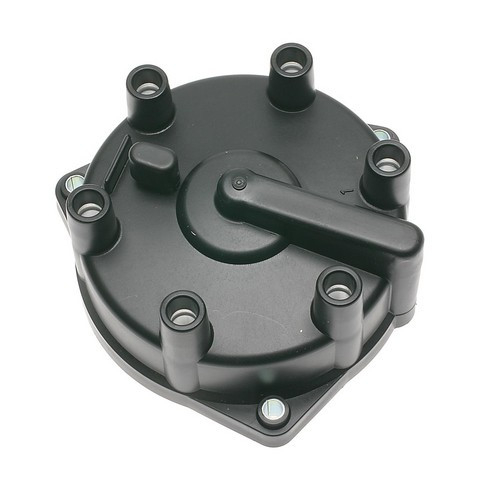
Help deliver ignition voltage cleanly to every spark plug wire with the Standard Distributor Cap JH-193, a Camry distributor cap that drops in as a direct-fit replacement for the 1992-1993 Toyota Camry. The cap sits on top of the distributor, receives high voltage from the ignition system, and passes it through its terminals to the spark plug wires as the rotor turns beneath it.
- In-house quality control: As a global manufacturer of original equipment ignition products, Standard oversees quality at every stage, from componentry to the finished product.
- Reinforced polyester resin body: Made of high dielectric strength, glass/mineral reinforced polyester resin. It is designed for less carbon tracking and greater resistance to electrical breakdown.
- RFI resistors where specified: On applications that call for them, RFI resistors help suppress radio static and potential ECU-damaging spikes.
- Solid brass terminals where available: Where available, solid brass terminals make better connections and resist electrical pitting and corrosion.
Signs a distributor cap may need replacing include cracks, carbon tracks, corroded or worn terminals, engine misfire, hard starting, and rough running. If a worn cap is the cause, JH-193 replaces it. Other ignition components can produce similar symptoms, so diagnose the system before replacing parts.
Fitment: This Toyota Camry distributor cap is listed for 1992-1993 Toyota Camry models. See the Buyer's Guide tab for engine specifics.
Interchange: 10-0256
C746 · JD932 · EP341 · 19017048 · 1910174170 · 100256
This part cross-references / interchanges with the following part numbers:
C746, JD932, EP341, 19017048, 10-0256, JH-193, 1910174170