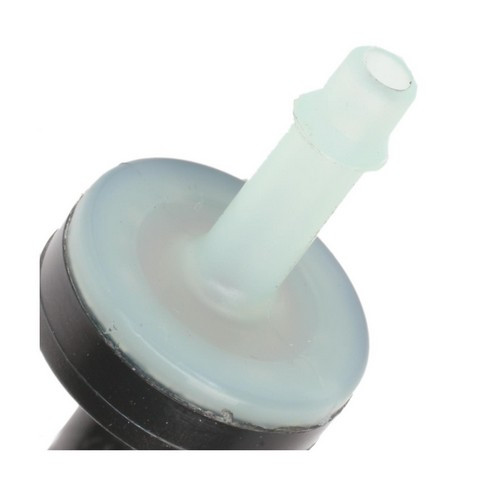
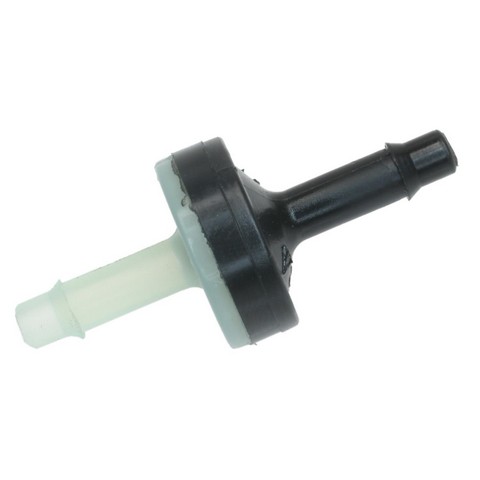
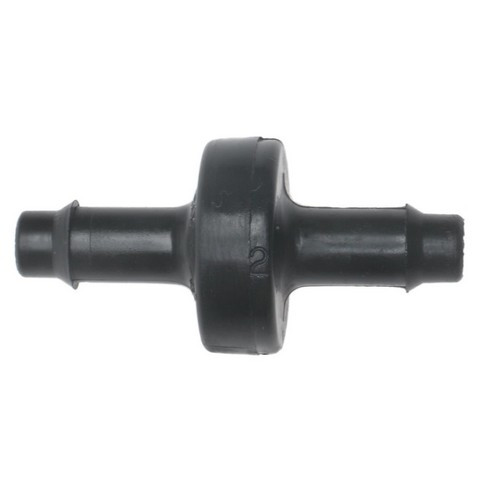
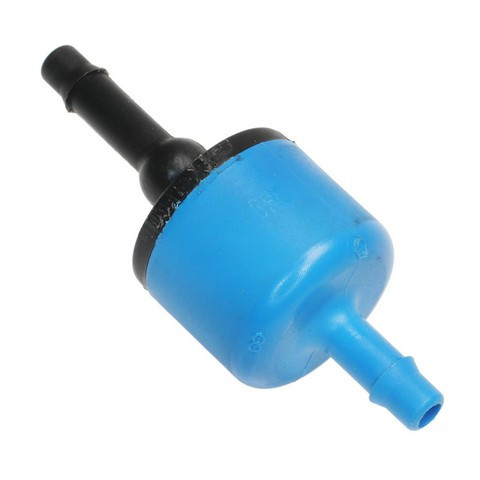
Standard Ignition Distributor Check Valve P/N:DCV1
$10.99
(You save)
Hold vacuum to the distributor's advance diaphragm with the Standard Ignition Distributor Vacuum Advance Check Valve (DCV1). This one-way check valve drops in as a direct-fit replacement across a broad list of AMC and Ford applications, including the 1978 AMC AMX, 1977 AMC Hornet, 1994-1997 Ford Aspire, 1992-1997 Ford Crown Victoria, 1979-1997 Ford Mustang and many more — see the Buyer's Guide tab for the full list.
Installed in the vacuum line, the valve lets vacuum travel to the distributor's vacuum advance unit while limiting backflow, helping maintain advance as engine vacuum changes. If a leaking or stuck check valve is the cause of lost vacuum advance, hesitation, or sluggish throttle response, this replaces it — diagnose the vacuum circuit before installing.
Emission-focused manufacturing: built by a global emission-component maker with quality control maintained from componentry through the finished valve.
Backed by R&D: decades of industry-leading research and development aimed at the technician's needs.
Two hose connectors: ties into the vacuum line through two ports.
Contents: one check valve.
Country of origin: United States. Manufacturer part number DCV1.
This part cross-references / interchanges with the following part numbers:
It's a one-way valve in the distributor's vacuum-advance line. It lets vacuum reach the vacuum advance diaphragm while limiting backflow, helping hold advance as engine vacuum changes.
What vehicles does it fit?
It's a direct-fit replacement for many 1970s–1990s AMC and Ford applications, such as the AMC AMX, Ford Crown Victoria, and 1979-1997 Ford Mustang. See the Buyer's Guide tab for the full list of applications.
How many hose connections does it have?
Two hose connectors, so it splices into the vacuum line between the vacuum source and the distributor's vacuum advance unit.
What are signs this valve may need replacing?
Loss of vacuum advance, hesitation, or poor throttle response can be signs, but these have other causes. Test the vacuum circuit first and replace this valve only if it is the fault.
How many are needed and where is it made?
The listed applications use one per vehicle, and it ships as a single valve. Country of origin: United States.
Write a Review
STANDARD MOTOR PRODUCTS
Standard Ignition Distributor Check Valve P/N:DCV1
Distributor Vacuum Advance Check ValveAs a global manufacturer of emission components, complete quality control is maintained through the manufacturing process from componentry to finished...
Distributor Vacuum Advance Check ValveAs a global manufacturer of emission components, complete quality control is maintained through the manufacturing process from componentry to finished...
WARNING:
These products can expose you to chemicals including lead and phthalates, which are known to the State of California to cause cancer and birth defects or other reproductive harm. For more information go to
www.P65Warnings.ca.gov.