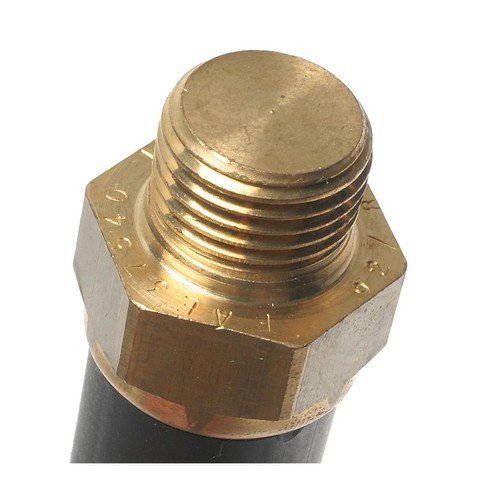
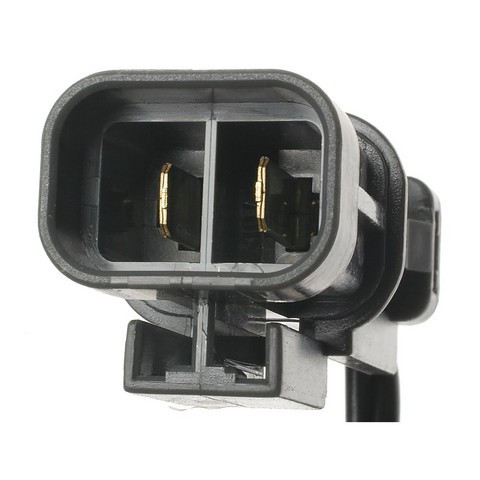
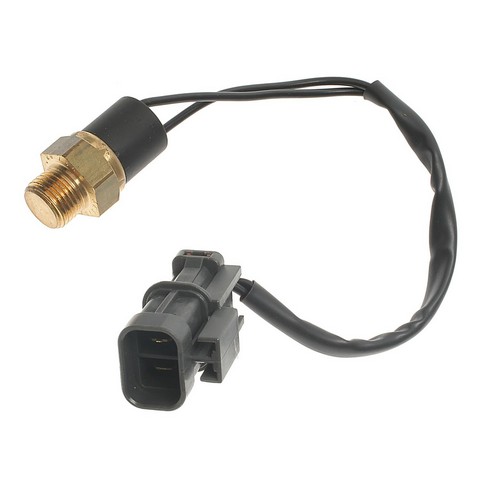
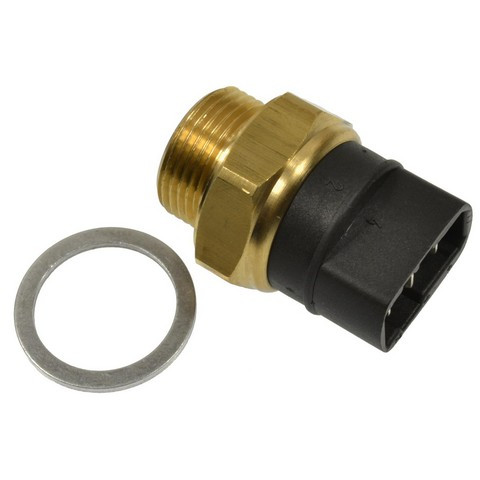
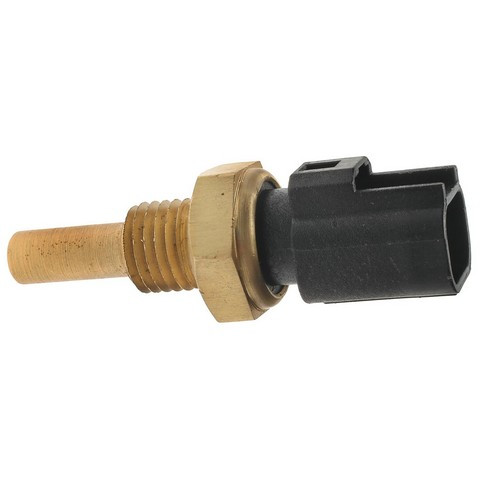
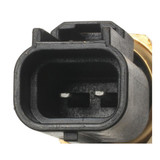
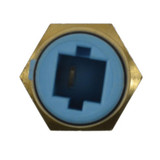
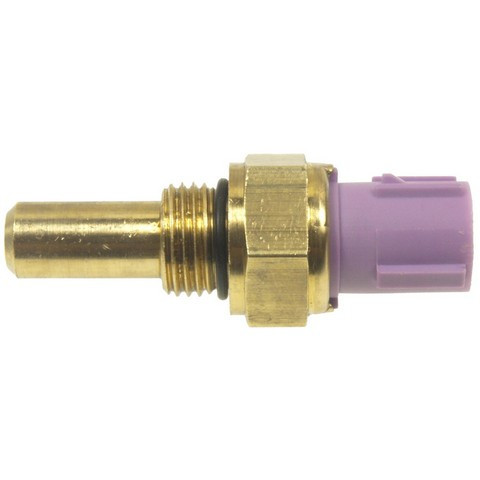
Standard Ignition Engine Cooling Fan Switch P/N:TS-127
$45.99
(You save)
Keep your cooling fan cycling on at the right temperature with the Standard Ignition switch TS-127, a coolant fan switch that senses engine coolant temperature and signals the fan controller when the set point is reached. It's a direct-fit replacement for the 1985-1989 Nissan Maxima, 1986-1989 Nissan Stanza, and 1985-1986 Porsche 928 — see the Buyer's Guide tab for engine specifics.
Temperature-triggered actuation: a custom wax formulation expands when heated to drive a snap-action electrical contact, transferring the signal to the fan controller.
Factory-calibrated set point: every unit is calibrated and tested to confirm switch actuation at its specified lower-temperature set point.
Bimetallic contact arm: built with a formed bimetallic arm whose two fused metals move at different expansion rates — a creep-action device for precise performance.
Robust build: high-grade materials and quality control from componentry to finished product.
If a failed fan switch is the cause of an overheating engine or a fan that won't cycle, this replaces it; diagnose the cooling system first. A common fit for the Maxima switch and Porsche 928 switch applications listed above.
It senses engine coolant temperature and, when its calibrated set point is reached, closes a snap-action electrical contact to signal the fan controller to run the cooling fan.
Does it fit my Nissan Maxima?
Yes, it's a direct-fit replacement for the 1985-1989 Nissan Maxima, plus the 1986-1989 Nissan Stanza and 1985-1986 Porsche 928. Check the Buyer's Guide tab to confirm your vehicle.
How is the switch actuated?
A custom wax formulation expands when heated to drive a snap-action contact, and a formed bimetallic arm uses two fused metals with different expansion rates as a creep-action device for precise performance.
What are signs this switch may need replacing?
A cooling fan that won't turn on, runs constantly, or an engine that overheats can point to a failed fan switch. Diagnose the cooling system first, since these symptoms have other causes.
Is the switch calibrated?
Yes. Every unit is factory-calibrated and tested to confirm actuation at its specified lower-temperature set point.
Write a Review
STANDARD MOTOR PRODUCTS
Standard Ignition Engine Cooling Fan Switch P/N:TS-127
Keep the engine's cooling fan switching on at the right temperature with this Standard Ignition switch — the Engine Cooling Fan Switch TS-280. This thermal switch closes an electrical contact at its...
Help your electric cooling fan switch on at the right temperature with the Standard Ignition switch TS-490, an engine cooling fan switch built for the 1989-1992 Daihatsu Charade. When coolant reaches...
Help your cooling fan switch on at the right coolant temperature with this Standard Ignition switch, the TS-276 Engine Cooling Fan Switch. It's a direct-fit replacement for the 1993 Mazda 626 and the...
Keep the electric cooling fan switching on when engine temperature calls for it with the Standard Ignition Engine Cooling Fan Switch, part number TS-106. This coolant fan switch is a direct-fit...
Keep your cooling fan responding to engine temperature with the Standard Ignition Engine Cooling Fan Switch TS-187. This coolant fan switch senses coolant temperature and sends the electrical signal...
WARNING:
These products can expose you to chemicals including lead and phthalates, which are known to the State of California to cause cancer and birth defects or other reproductive harm. For more information go to
www.P65Warnings.ca.gov.