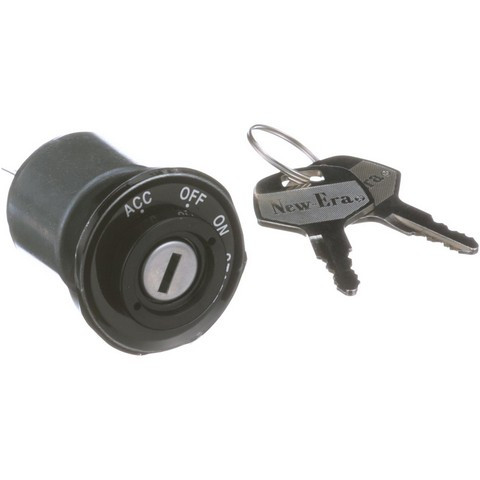
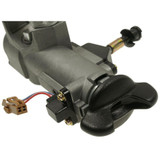
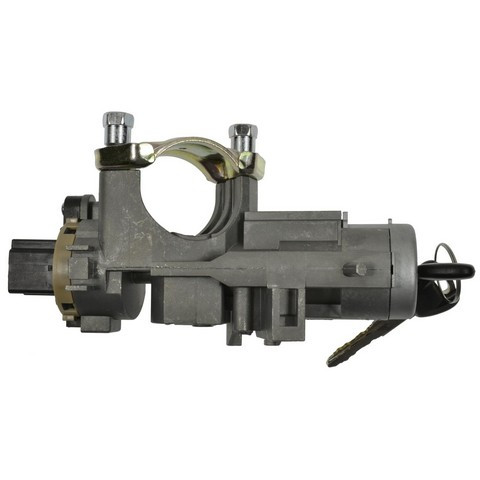
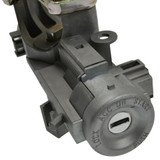
Standard Ignition US-640 switch for the 1998-2002 Subaru Forester combines the key lock cylinder and the ignition switch in one assembly. The key turns in the lock cylinder to operate the switch for the ignition and starting circuits.
- Copper alloy conductors for low resistive losses and good electrical conductivity
- Every unit is tested for both mechanical and electrical switching performance
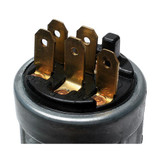
- Six male blade terminals and two female connectors
- Two keys come with the assembly
Quick facts
- Part: Standard Ignition US-640 switch
- Fits: 1998-2002 Subaru Forester
- Condition: New
A key that sticks or will not turn, or a car that cuts out or will not crank, can mean the switch or lock cylinder is worn. These signs alone do not prove this switch is the problem, since a weak battery can also stop the engine from cranking.
Fits
It is a direct-fit 1998-2002 Subaru Forester switch. The 1998-2002 Subaru Forester takes one, and this listing is a single switch with lock cylinder.
Specifications
Fit and size
- Quantity per vehicle: 1
- Terminals: 6, male blade
- Connectors: 2, female
- Keys: 2
Build and materials
- Type: ignition switch with lock cylinder
- Conductors: copper alloy
- Coding: coded
- Condition: New
- Country of origin: Taiwan
In the box
One switch with lock cylinder, two keys and a mounting bracket. Hardware and instructions are not included, so plan on new fasteners rather than reusing the old ones.
Interchange: CS999 · KS6999 · LA1151 · 83121FC060 · 83121FC061
Product information is for general reference and may contain errors. See our Disclaimer.
This part cross-references / interchanges with the following part numbers:
CS999, KS6999, LA1151, US-640, 83121FC060, 83121FC061
Frequently Asked Questions
Is this ignition switch for the 1998-2002 Subaru Forester?
Yes. Standard Ignition US-640 fits the 1998-2002 Subaru Forester, and the Forester takes one.
Does the Standard Ignition US-640 come with keys?
Yes. It includes two keys, the lock cylinder and a mounting bracket. Hardware and instructions are not included.
What kind of terminals does this switch have?
This switch has six male blade terminals and two female connectors.
How can I tell if the lock cylinder is worn?
A key that sticks, will not turn or is hard to pull out can mean wear. A shop can test the switch electrically to find out.
Is the Standard Ignition US-640 switch tested for electrical performance?
Yes. Every Standard Ignition US-640 is tested for both mechanical and electrical switching performance.