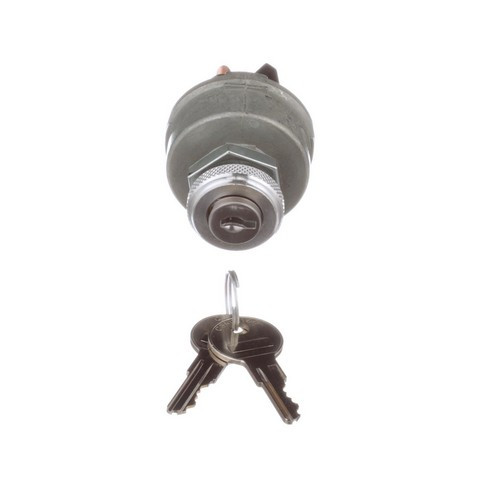
Standard Ignition Ignition Lock Cylinder and Switch,Ignition Switch P/N:US-14
Standard Ignition Ignition Lock Cylinder and Switch,Ignition Switch P/N:US-14
$38.99


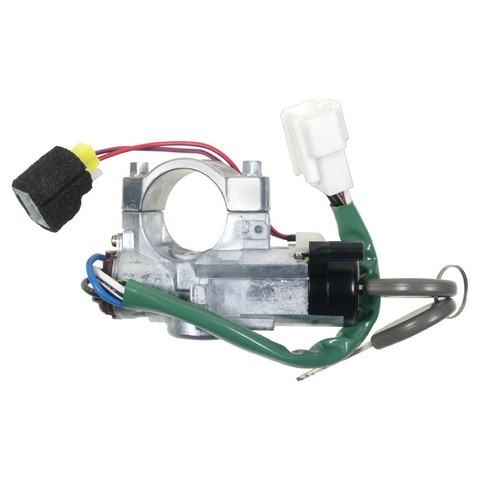
Standard Ignition US-942 ignition lock and cylinder switch for the 2001 Honda Civic takes the key and connects power to the ignition and starting circuits. It is an ignition switch with lock cylinder, so the key and the switch come as one unit.
A key that sticks or will not turn, a car that will not crank, or dash lights that cut out can be signs of a worn ignition lock and cylinder switch. These signs alone do not prove this part is the problem, since a weak battery can also leave a car that will not start.
This 2001 Honda Civic switch is a direct-fit OE replacement, and the car takes one.
Fit and size
Build and materials
One ignition lock cylinder with 2 keys and a mounting bracket. Hardware is not included, so plan on new fasteners.
Interchange: CS1302 · KS7302 · 35100S5AA51 · 35100S5AA51NI · LA10060
This part cross-references / interchanges with the following part numbers:
Is the Standard Ignition US-942 the right ignition lock and cylinder switch for a 2001 Honda Civic?
Yes. Standard Ignition US-942 is a direct-fit OE replacement for the 2001 Honda Civic, and the car takes one.
Does the Standard Ignition US-942 ignition lock and cylinder switch come with keys?
Yes. Standard Ignition US-942 includes a coded lock cylinder with 2 keys and a mounting bracket. Hardware is not included.
How many terminals does this ignition lock and cylinder switch have?
This switch has 18 male terminals, blade and pin types, spread across 3 female connectors.
What can a failing ignition lock and cylinder switch look like?
A key that sticks or will not turn, a car that will not crank, or dash lights that cut out can be signs of a worn switch. A shop can test it.
Are instructions included with this ignition lock and cylinder switch?
Yes. An instruction sheet comes with the part for the installation steps.
No reviews yet — be the first to review this product.
Write a Review




WARNING: These products can expose you to chemicals including lead and phthalates, which are known to the State of California to cause cancer and birth defects or other reproductive harm. For more information go to www.P65Warnings.ca.gov.
