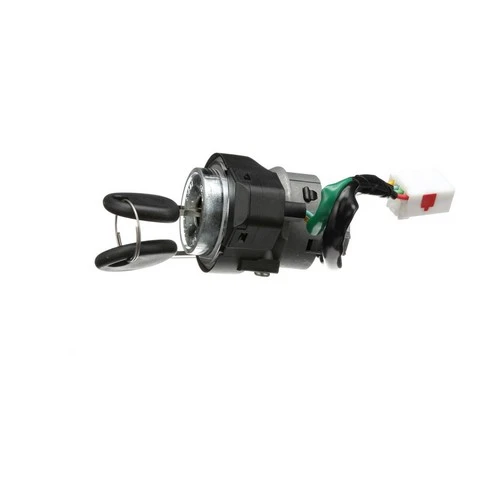
Standard Ignition Ignition Lock Cylinder P/N:US676L
Standard Motor Products
Standard Ignition US677L ignition lock cylinder for the 2006-2008 Kia Optima 4-cylinder 2.4L or V6 2.7L is the key-operated cylinder in the steering column that you turn to start the car. It is built to replace a worn or damaged cylinder.
A key that sticks, turns stiffly or is hard to pull out can mean the lock cylinder is wearing. These signs alone do not prove the cylinder is at fault; a worn key is another common cause.
This direct-fit OE replacement suits the 2006-2008 Kia Optima 4-cylinder 2.4L or V6 2.7L, which takes one lock cylinder.
Fit and size
Build and materials
One ignition lock cylinder and two keys. A mounting bracket is not included, so plan on a new one, since the old bracket may not be reusable.
Interchange: CS1151L · KS7152L · 819002GA00 · LC65513
This part cross-references / interchanges with the following part numbers:
Is the Standard Ignition US677L right for the 2006-2008 Kia Optima 4-cylinder 2.4L or V6 2.7L?
Yes. Standard Ignition US677L is listed for the 2006-2008 Kia Optima with either the 4-cylinder 2.4L or the V6 2.7L engine, and each car takes one.
Does the Standard Ignition US677L ignition lock cylinder come with keys?
Yes, Standard Ignition US677L comes with two keys and is coded. A mounting bracket is not included.
What are the keys and tumblers on this ignition lock cylinder made of?
The tumblers are solid brass, the keys are chrome plated brass and the lock core is die-cast zinc. The body is made from high-grade aluminum.
What connector does this ignition lock cylinder use?
This ignition lock cylinder has one rectangular male connector with four female blade terminals.
Do installation instructions come with this ignition lock cylinder?
Yes, instructions come with the cylinder, and it is designed to match the original to make installation easy.
No reviews yet — be the first to review this product.
Write a Review
WARNING: These products can expose you to chemicals including lead and phthalates, which are known to the State of California to cause cancer and birth defects or other reproductive harm. For more information go to www.P65Warnings.ca.gov.