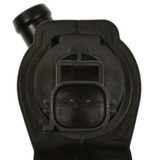
Standard Ignition Vapor Canister Vent Solenoid,Vapor Canister Vent Valve P/N:CVS158
Standard Ignition CVS188 vapor canister vent solenoid for the 2001 Honda CR-V 4-cylinder 2.0L and the 2002-2004 CR-V 4-cylinder 2.4L controls the flow of fresh air into the fuel vapor canister. This Standard Ignition 2 terminal vapor canister vent solenoid is specially engineered for higher-mileage Honda vehicles.
A check engine light for an EVAP fault, a fuel smell or trouble filling the tank can mean a vent solenoid is stuck or failing. These signs alone do not prove the solenoid is at fault, since a loose or worn gas cap can set the same EVAP code.
It is a direct-fit replacement for the 2001 Honda CR-V 4-cylinder 2.0L and the 2002-2004 CR-V 4-cylinder 2.4L, and both engines call for one solenoid. It meets OE specifications.
Fit and size
Build and materials
One vapor canister vent solenoid.
Interchange: 2-282768
CPV198 · PV2077 · 06172S9A305
This part cross-references / interchanges with the following part numbers:
Will the Standard Ignition CVS188 vent solenoid fit the 2001 Honda CR-V 4-cylinder 2.0L?
Yes. Standard Ignition CVS188 fits the 2001 Honda CR-V 4-cylinder 2.0L and the 2002-2004 CR-V 4-cylinder 2.4L, one solenoid per vehicle.
Does the CVS188 vent solenoid come with a connector or hoses?
The solenoid has its own connector built in. Beyond the solenoid itself, no other items are listed in the contents.
How many ports does the CVS188 vapor canister vent solenoid have?
It has three ports and three hose connectors.
Can a bad vapor canister vent solenoid set a check engine light?
It can, because the solenoid controls fresh air into the fuel vapor canister of the EVAP system. A shop can scan the codes and test the solenoid.
Does Standard Ignition CVS188 replace PV2077?
Yes. PV2077 is listed as an interchange number for this solenoid, which is made in Japan.
No reviews yet — be the first to review this product.
Write a Review
WARNING: These products can expose you to chemicals including lead and phthalates, which are known to the State of California to cause cancer and birth defects or other reproductive harm. For more information go to www.P65Warnings.ca.gov.