


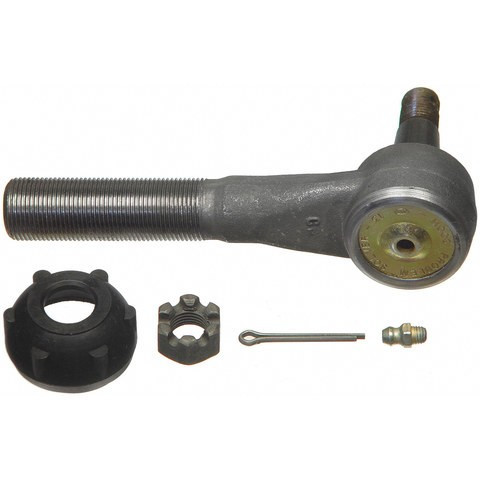


Help keep your steering precise and predictable with the MOOG Chassis tie rod end, part number ES2077RT, a front right outer unit that connects the tie rod to the steering knuckle and passes your steering input to the wheel. It fits many Ford vehicles, among them the 1980-1996 Ford F-150, 1980-1997 Ford F-250 and 1983-1992 Ford Ranger. See the "Vehicles it fits" section for the full list.
Built for the front right outer position, this steering tie rod end is a direct-fit replacement for the listed applications, including the 1983-1992 Ford Ranger. If a worn outer tie rod end is behind loose or wandering steering, replacing it with ES2077RT helps restore vehicle handling.
- OE fit and function: Designed to match the original part's fit and function on the listed applications.
- Protective boot: A premium boot helps keep dirt and moisture out of the joint.
- Engineer-tested: Put through testing by MOOG engineers throughout design and development.
Signs this part may need replacing: loose or vague steering, the truck wandering on the road, a clunk when turning, uneven wear on the front tires, or a torn boot. Diagnose the cause before replacing parts, and plan on a wheel alignment after installation.
Frequently Asked Questions
What does this tie rod end do?
It links the tie rod to the front right steering knuckle, so steering input reaches the wheel. ES2077RT is the outer tie rod end for the front right position.
Is this the right tie rod end for a 1980-1996 Ford F-150?
Yes. ES2077RT is listed as the front right outer tie rod end for the 1980-1996 Ford F-150. Check the "Vehicles it fits" section to confirm your truck.
Will this tie rod end fit a 1983-1992 Ford Ranger?
Yes. It is listed for the 1983-1992 Ford Ranger in the front right outer position. The "Vehicles it fits" section shows every vehicle it fits.
What are the signs a tie rod end may be worn?
Loose or wandering steering, a clunk when turning, uneven front tire wear or a torn boot can be signs of a worn tie rod end. Have the steering inspected to confirm the cause.
What should I know when installing it?
A wheel alignment is generally needed afterward because the tie rod end affects toe. Follow the vehicle service information for torque values and the correct fasteners.
Reviews
No reviews yet — be the first to review this product.
Write a ReviewWrite a Review